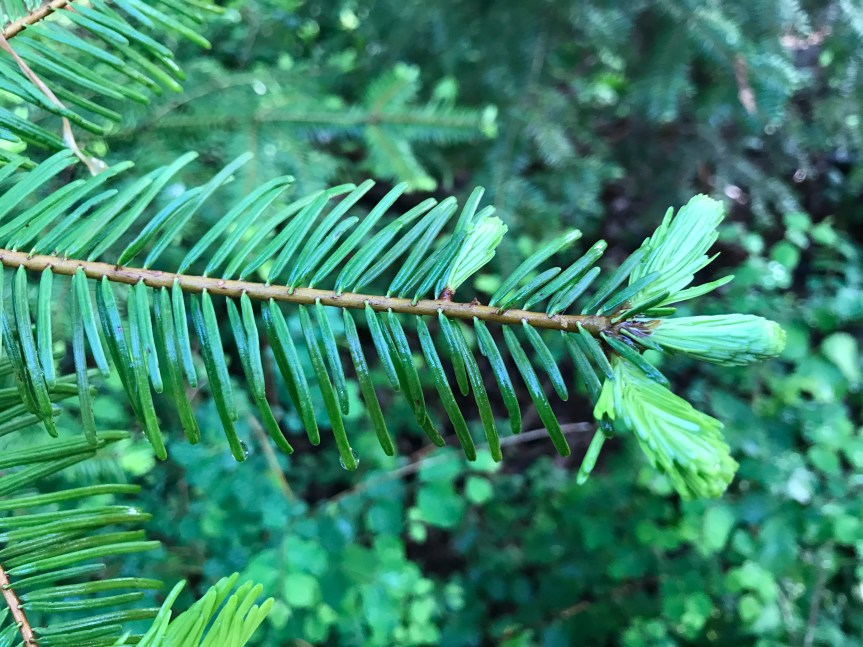
Wordless Wednesday


Since September of 2016, our local GreenFriends group has been working to restore a four-lot strip of Seattle’s Greenbelt to the healthy forest it was meant to be. In October of 2016, we linked our project to the Green Seattle Partnership, a collaborative group that includes the City of Seattle Parks Department, Forest Stewards, and many other nonprofit organizations, all of whom are dedicated to restoring Seattle’s 2,500 acres of forested parks.
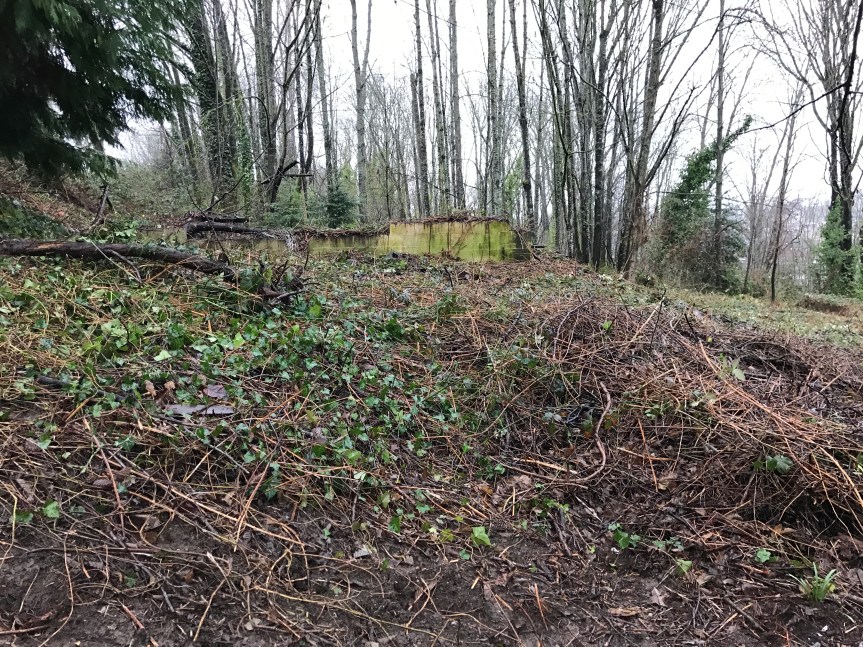
This strip of Greenbelt has been covered by blackberry vines and ivy for 30-50 years. When the City of Seattle staff cut down the blackberry vines in March of 2017, they discovered the foundation of a house. We believe that house burned down in the 50’s. With blackberry vines that at times reached nine-feet in height growing over and around it, no one in the neighborhood even knew the foundation was there. We decided to focus on that area during the April 30 work party.
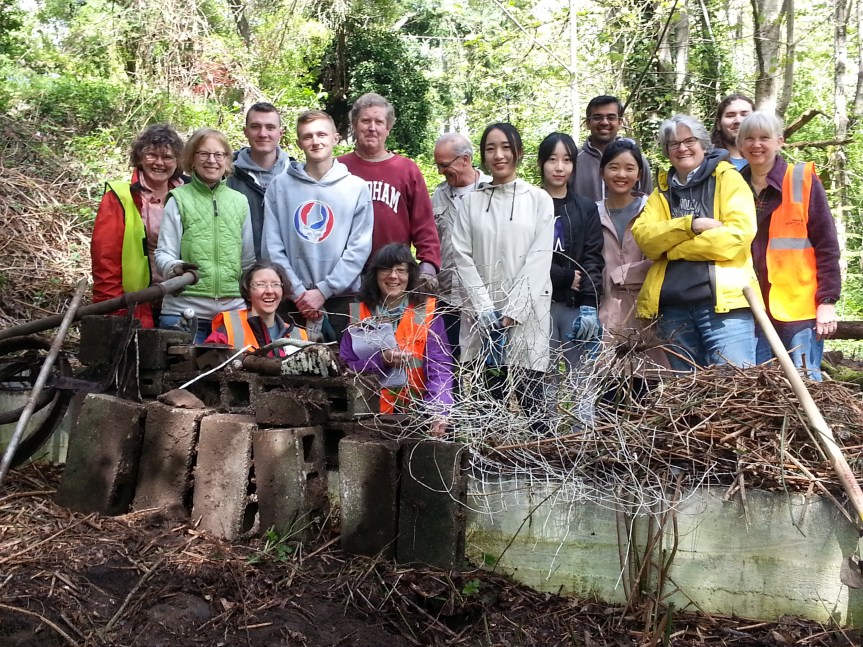
This particular work party was held in honor of Bridge 2 Beach Earth Day, an annual event focused on making “Mother Earth more beautiful and [Seattle] neighborhoods sparkle.” This year the Rainier Chamber of Commerce, the sponsor of the event, invited the Green Seattle Partnership to join in the effort.
Our work party began at 10 a.m. and lasted until 1 p.m. Seven GreenFriends, two Forest Stewards from the Green Seattle Partnership, a neighbor, and six students from a University of Washington Environmental Science class participated.

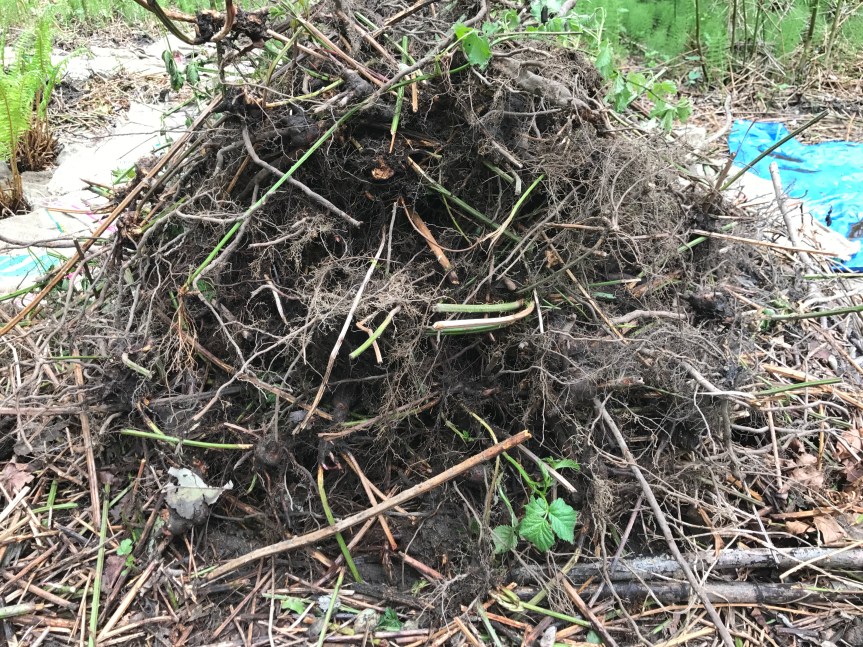
Our primary task for the day was to remove blackberry root balls and put them on racks made from fallen tree branches. That way, the roots cannot touch the ground and will dry out. The photo below shows one of the three root ball piles that we created that day. [Some of the root balls you see in the photo were touching the ground, so were moved to the top of the pile at a later time.]
In the process of clearing the root balls, we found many objects in the dirt. This was probably the first time these items had been exposed to the light of day since sometime in the 60’s


We even found a foot-long worm!

We have discovered many interesting things since we began the project. This may be my favorite one. I wonder how old it is.

Once the root balls are removed, we cover the cleared land with burlap bags to reduce weed growth. Then dried blackberry canes and other debris are placed on top of the burlap. In time, the bags and debris will turn into mulch which will hold in moisture and enrich the soil.
Below are some “before and after” photos from our three-hour work party.


It was such a fun, productive and rewarding day. We accomplished more than I ever thought possible. When I reported the students’ hours to their professor, he told me he was sure there would be plenty of interest if I wanted to schedule another work party. I decided to offer one on Saturday May 13. The professor sent a notice to the students at 7:30 p.m. and when I checked the next morning, the event was full! I look forward to whatever we experience and discover that day.
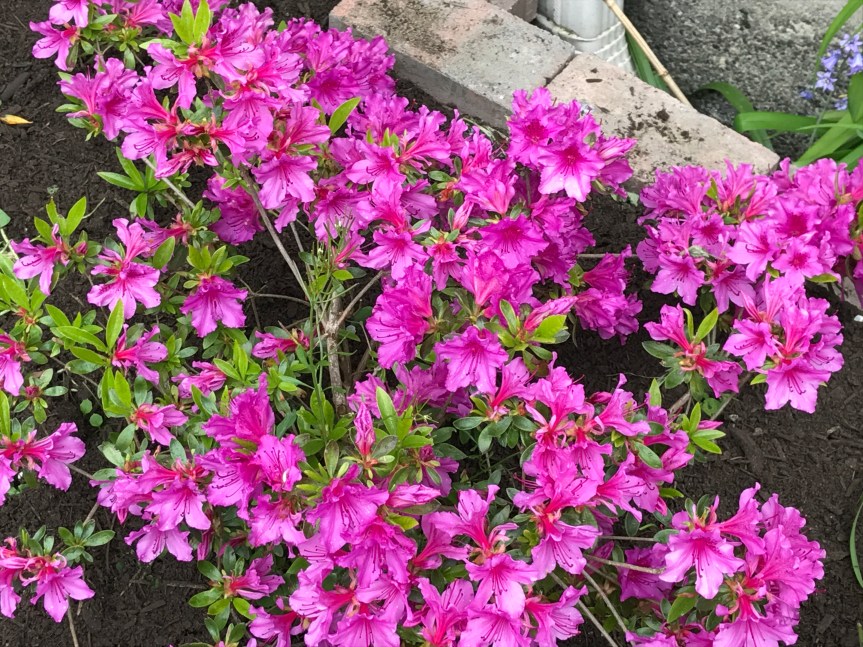
I have been working so much in the Greenbelt that I have neglected my own yard. Last week, I temporarily changed my priorities.
Yesterday afternoon, I spread cedar chips in the walkways. Their smell is like perfume to me.


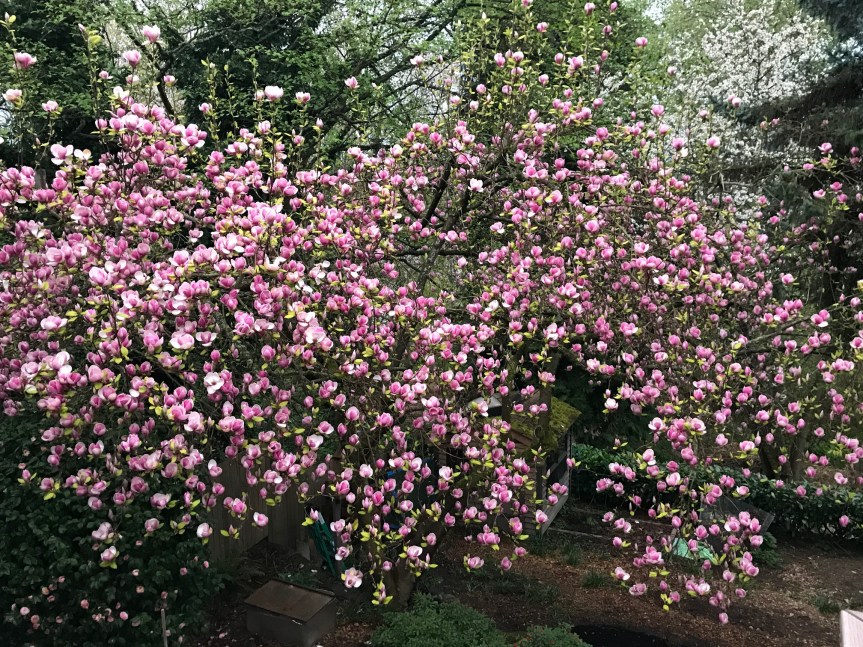
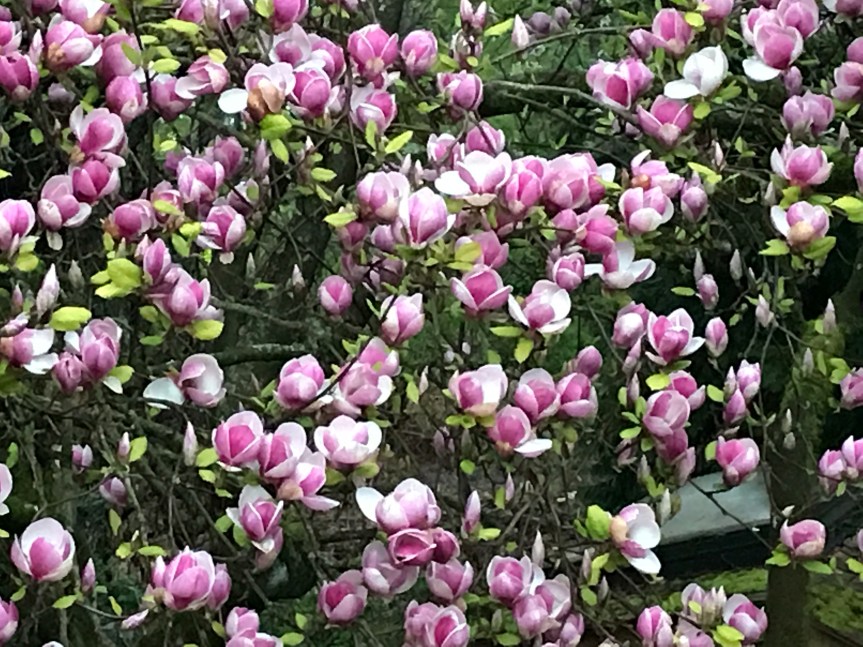
Note 1: The flower petals are falling from the magnolia tree above.
Note 2: There is no part of this area that is finished but I hope the photos gave you a glimpse of what it is becoming.
I laughed when I read that the April 26 Daily Post prompt was Roots. My life is filled with roots. I even dream about roots.
Our local GreenFriends group has taken on the responsibility of restoring four lots in Seattle’s Greenbelt. That land has been overrun by blackberries and ivy for decades. Part of our job in phase one of the project is to remove the blackberry vines and their root-balls.
The City of Seattle Parks Department staff cut down most of the blackberry vines in March. There are now thousands of canes sticking up from the ground. They lead us to the root-balls.


Raking up the debris makes it easier for us to see the canes and to dig out the root-balls.

Once we dig them out we put them on racks so they can dry out.
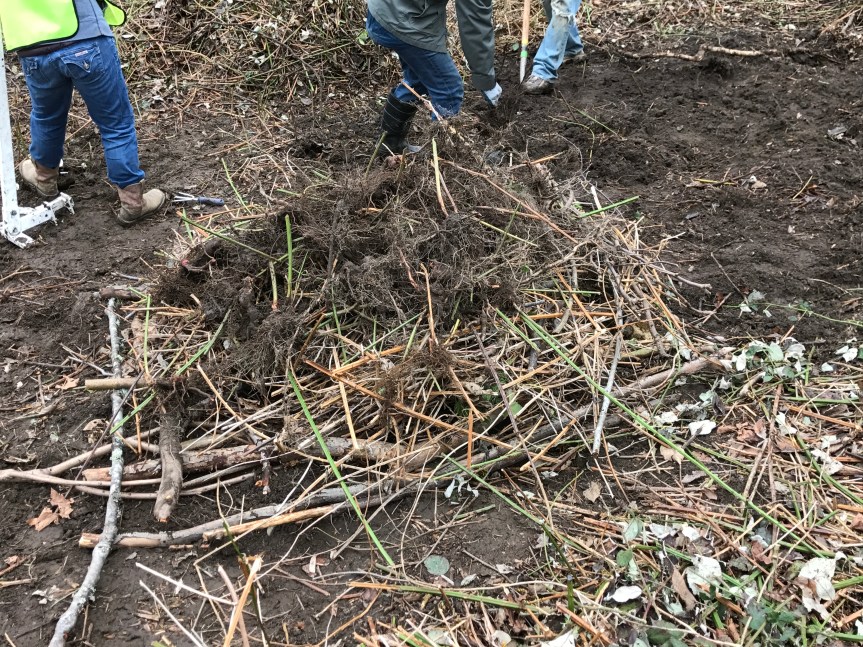

I suspect that blackberry root-balls will be in my life for years-to-come.


To read more about this project go to Greenbelt Restoration Project Update
I am truly blessed.


When I attended Amma’s programs at MA Center Chicago last summer, I walked to their big echinacea field. I found the flowers fascinating. I loved how unusual they looked at each stage of development and was particularly intrigued by the spikes in the center of the flower.


Soon after returning to Seattle, I decided to purchase some echinacea plants for my own garden… and a microscope. When I looked at the flower under the microscope, I gasped; my eyes beheld the magnificence and wonder of nature. (Click on the galleries to enlarge the photos.)



I remodeled my house in 1985. The windows to the kitchen were boarded up for at least 3 months. On the day that they took the boards off the windows, this was the view. The tree is as beautiful today as it was on that 1985 morning.

Yesterday, I attended a chant of the Hanuman Chalisa, a 40 verse poem that is believed to have been written by Tulsidas in the 16th century. I have loved that chant since the mid-nineties.
Wikipedia says this about Hanuman:
Lord Hanuman is an ardent devotee of Lord Sri Rama and is widely known for his unflinching devotion to Sri Rama. Hanuman is the symbol of strength and energy. He is said to be able to assume any form at will, wield the gada (including many celestial weapons), move mountains, dart through the air, seize the clouds and equally rival Garuda in swiftness of flight.
Lord Hanuman is worshiped as a deity with the ability to attain victory against evil and provide protection.
During the time in my life that I made tiny dolls of the Hindu Gods and Goddesses, one of the dolls I made was of Hanuman. The doll on the left side of the gallery below was my first Hanuman doll; I still keep it on my altar. Hanuman is usually depicted with Lord Rama or Lord Rama and Sita in his heart, but I put a photo of Amma in the heart of my Hanuman doll.


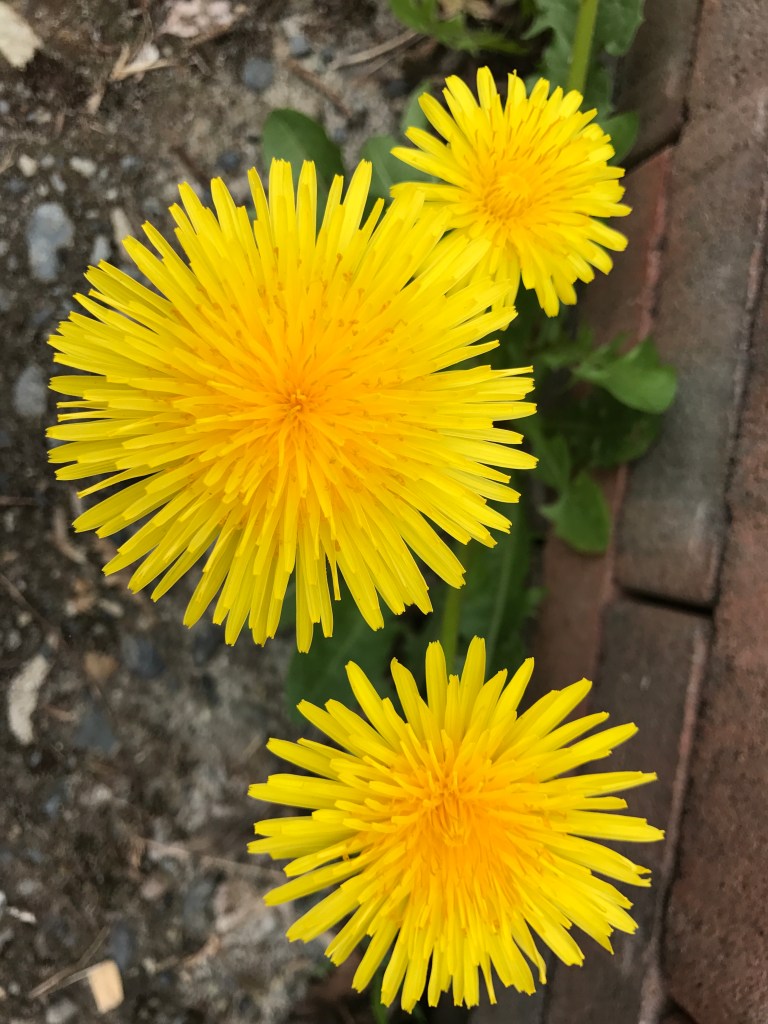
On my way to the Hanuman program yesterday, I stopped by a local nursery and bought two Oregon grape plants for my yard. They both had beautiful yellow blossoms. This morning, I realized that I had planted them in an area that has other yellow flowers and that yellow is the color that is most associated with Hanuman.


After writing the first draft of this post, I decided to work outside. I told the friend who was working with me about the yellow flowers. He reminded me that yellow is also the color of Vishu, a holiday that celebrates our deep connection with nature. Vishu was two days ago. Below is a photo of the flower most associated with Vishu, along with a message that Amma gave on that day.

I am excited that I have inadvertently dedicated a part of my yard to Hanuman and Vishu. I love synchronicity.
The Art and Craft of Blogging
A collection of discussions on the environmental issues
“The fool doth think he is wise, but the wise man knows himself to be a fool.” “Love all, trust a few, do wrong to none.” “Love looks not with the eyes, but with the mind, And therefore is winged Cupid painted blind.”-William Shakespeare
...moments of unexpected clarity
Home of Lukas Kondraciuk Photography
Wellness, Support and Mindset
Thoughts on Creativity & Deeper Things
A Blog by Novella Carpenter
Ramblings of an Irish ecologist and gardener
Teaching the art of composition for photography.
Blog from SathyaSaiMemories ~ stories of love in action and the benefits of giving
There are 11,507 stories in Haddonfield; this is one of them.
Perennial gardening and more from the Green Mountains of Vermont
Whatever it will be...
Welcome to my little slice of the blogosphere
 Living, Learning and Letting Go