A Day of Challenges!

Today was one of those days where I had “plans” but all of them changed.

It started with me waking up at 1:45 a.m. I had been dreaming about Sanskrit and about blogging, something that is happening with increasing frequency, but thankfully it is not usually that early. As I moved from a dream state into a more conscious state of mind, the idea of posting a Sanskrit declension matrix by making a Power Point slide show came to my mind. Then the idea of adding audio to it surfaced.

I have helped others with Power Point slide shows before but only by typing in the words. I had never done a real one and I certainly had never put audio to one. As I lay there sleepless, I started pondering how to do it. Around 3:00 a.m., since sleep didn’t seem to be coming, I got up.

I went back to bed for about an hour and a half at 5:00 a.m. and then spent most of the day working on this project. The slide show went together quickly and even the audio was reasonably easy to figure out. But then came getting correct pronunciation, correct timing and most time consuming of all, finding a way to put it into a format that the blog would accept. That last part took until 7:45 tonight! But with Grace and persistance, I finished it!

I’ve mentioned in earlier posts that every noun in Sanskrit may have 7 or 8 different cases. You can identify those cases by how the word ends.

Cases:

1st case is the subject
2nd case is the object
3rd case – “with” (with a fork)
4th case- “for” (for the beggar)
5th case- “from” (from the city)
6th case- possessive or “of” (boy’s; of the boy)
7th case- “in, at, on”

The slide show will present the declensions for the pronoun “aham” which means “I”. Singular, dual (2 people) and plural (i.e. three or more) forms will be presented for each of the seven cases. You will notice that some of the words are the same but have different meanings. In those instances, we have to read the word in a sentence to determine the meaning.

So with that for an introduction, here is my PowerPoint Slide Show with Audio of the declensions for the word “aham”! (In hindsight, it would have been helpful for me to put the case number and whether the word was singular, dual or plural on the slides, but even this way it gives you a good idea what the process is like!) I hope you enjoy it.

Waking in the Night (Troiku)

I have been intrigued lately by a form of poetry that Tournesol from Traces of the Soul and Tournesol Dans Un Jardin has been writing.  (See Courting Moon.)  The style is a new form of Haiku called Troiku that was developed by Chevrefeuilles.

In this style, there is a three lined Haiku that is the base of the poem.  The author then creates a separate Haiku using each of the base lines.

Here is my first attempt at writing a Troiku!


*****

Waking in the night

dreaming about Sanskrit

It’s time to blog!


Waking in the night

Raindrops falling

Mind on overdrive


Dreaming about Sanskrit

Will I ever learn?

Yes!


It’s time to blog!

Ideas rolling in

Can sleep another day!


Mahatma Gandhi Quote

Mohandas_K._Gandhi,_portrait
Photo Credit: Wikimedia


My imperfections and failures are as much a blessing from God as my successes and my talents and I lay them both at his feet.


Wordless Wednesday

IMG_3293

Amma, Embodiment of Compassion

Amma, Embodiment of Compassion

For the tiny infant to the eldest elder, she is there.
For the faint of heart and the bravest of the brave, she is there.
For the rich and the poor, for the saint and the sinner, she is there.
For those who are happy and those in despair, she is there.

When I’m sad and lonely, when I’m in danger, she is there.
When my children, friends and family need help, she is there.
When I need momentum to learn and grow, she is there.
When I want a hug because I’m feeling low, she is there.

Amma, embodiment of compassion and love renowned.
I thank you with an appreciation that has no bounds.

*****

This slideshow requires JavaScript.

Note:  Most of the pictures come from Amma’s Facebook Page

Written for Writing 201: Hero(ine)  The assignment was to create a ballad using anaphora or epistrophe.  “Anaphora simply means the repetition of the same word (or cluster of words) at the beginning of multiple lines of verse in the same poem. Epistrophe is its counterpart: the repeated words appear at the end of lines.”

Weekly Photo Challenge: Another Rule of Thirds

20150221_114630

Posted for Weekly Photo Challenge: Rule of Thirds

Weekly Photo Challenge: Rule of Thirds

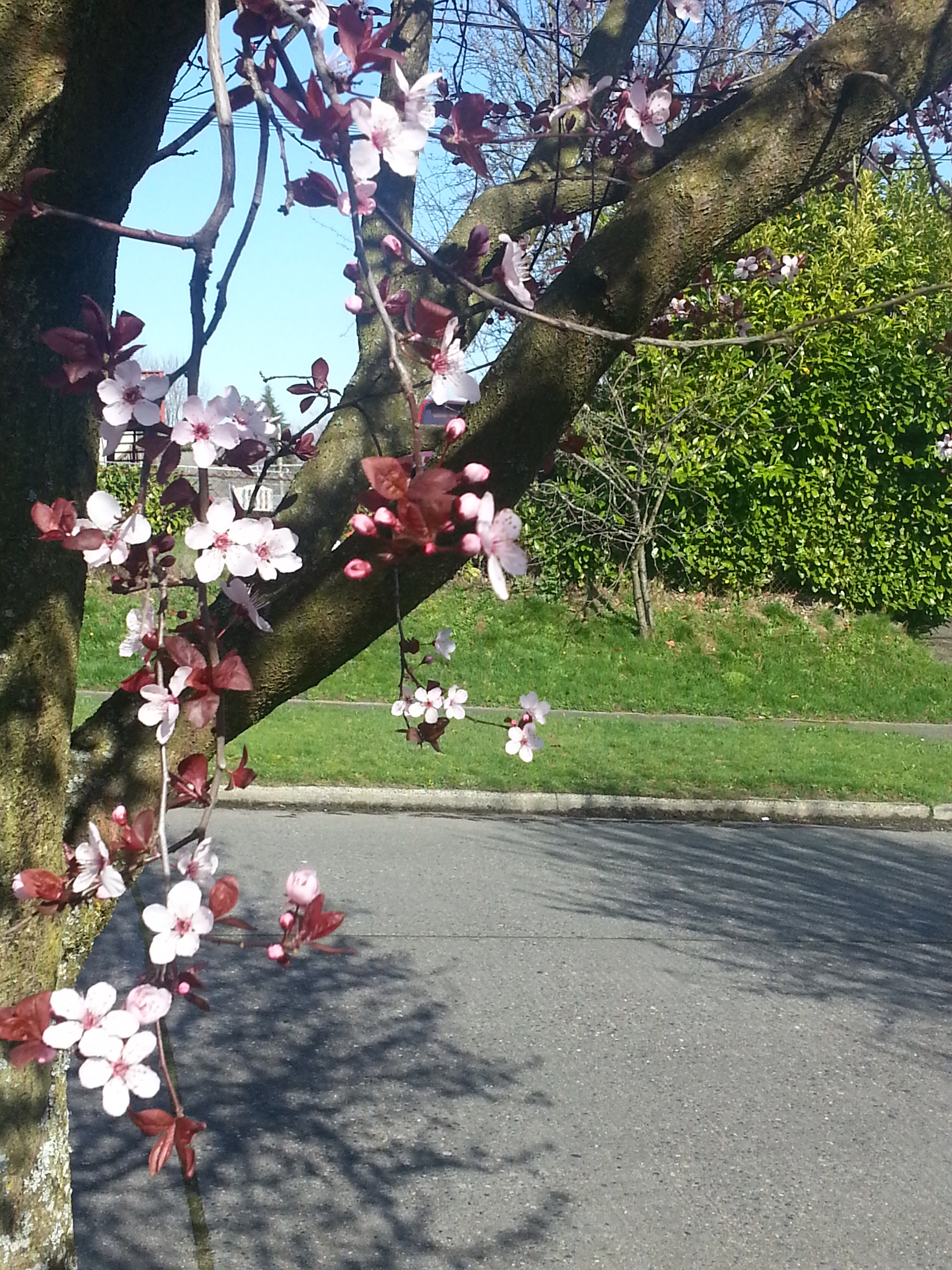
20150220_093747And here is a wider shot of the blooms a day later (not using the rule of thirds)!

20150221_090556

Posted for Weekly Photo Challenge: Rule of Thirds

The Fog

The 5th Writing 201: Poetry assignment was to write an elegy; a first-person poem on themes of longing, loss, and mourning. The word prompt was “fog.”  My poem is very rough, because I definitely don’t know what I am doing on this one!

I chose to write about my experience with Chronic Fatigue Syndrome during the 1980’s.  While the poem itself is unskilled, I believe there will probably be numerous readers who will relate to my experience.

The Fog

Five years living in the fog
Everything is slow; can’t think, can’t do.
Exhaustion never ends.
Plan after plan put on hold.
Dreading to go to bed at night
Can’t face yet another dawn.
Walking to the kitchen to make some food?
Not worth it… why try?
Heavy
Heavy
Heavy
Five years later, fog is lifting
Good days, bad days, but it’s shifting.
Will it end? Will it return?
Dare I hope?
May I hope?
Hope?

They Wiggle and Squiggle!

I love the variety of challenges Writing 201: Poetry is offering us.  Today’s assignment was to explore Concrete Poetry, also known as Shape Poetry.

“The idea here is to arrange your words on the screen (or the page) so that they create a shape or an image. The meaning of the image can be obvious at first glance, or require some guesswork after reading the poem. It’s up to you to decide how difficult you want to make it for your readers.”

We were also encouraged to use enjambment.

Enjambment “may sound like a mouthful. But what it describes is a really simple phenomenon: when a grammatical sentence stretches from one line of verse to the next.”

The word prompt we were to use was “Animal.”

“Polar bears, microbes in your cells, unicorns, your pet hamster, lolcats: find a way to include an animal, today’s word prompt, in your poem. Or write about a situation that can bring out the animal in you (or someone else). Or dig deeper into the word’s etymology (anima = latin for breath). One way or another, give us a beast of a poem.”

It was a fun assignment to do, although figuring out how to do the formatting in a way that it held when put into the post was a challenge.  I am grateful to the various people who offered suggestions.

So here is my animal shape poem using enjambment!

Shape poem2

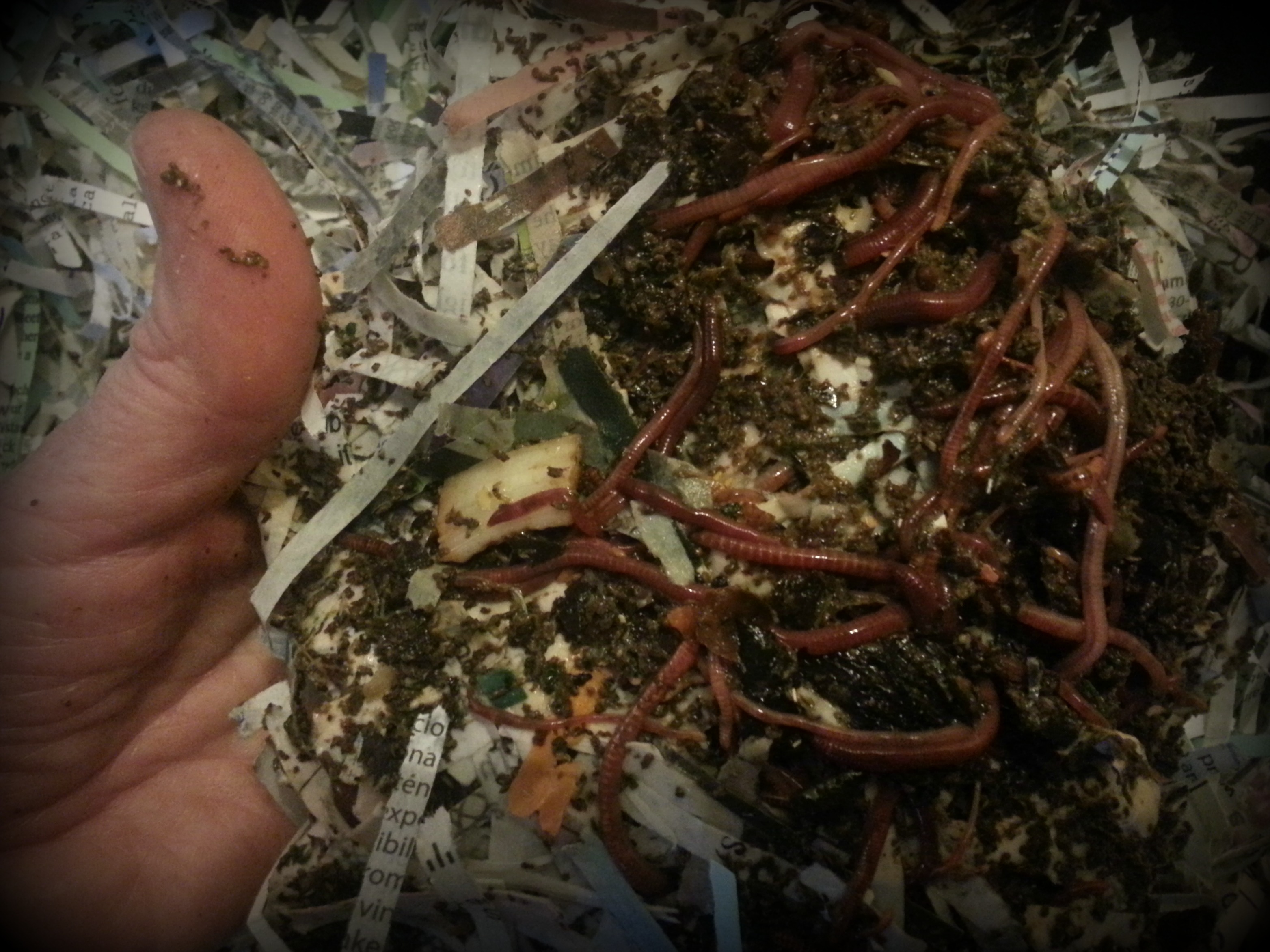
And here is a photo of my “pets!”

My Worms!