Exploring Utopia

I have been thinking about Utopia since last Thursday when Sreejit announced it as the topic for this week’s Dungeon Prompts. My reflection took me to some uncomfortable places that expanded beyond the scope of Utopia.

When I think of Utopia, I think of Shangri-La, and when I think of Shangri-La, I think of the 1973 movie The Lost Horizon, one of my favorite musicals of all time. [The movie was panned by critics but it really spoke to my heart.]

As I began to write this post, I looked up The Lost Horizon and found this YouTube recording of the opening theme song. Here are the lyrics and the video. I started to cry as I listened to the song.

Lyrics:

Have you ever dreamed of a place
Far away from it all
Where the air you breathe is soft and clean
And children play in fields of green
And the sound of guns
Doesn’t pound in your ears (anymore)

Have you ever dreamed of a place
Far away from it all
Where the winter winds will never blow
And living things have room to grow
And the sound of guns
Doesn’t pound in your ears anymore.

Many miles from yesterday before you reach tomorrow
where the time is always just today
there’s a lost horizon waiting to be found.
There’s a lost horizon where the sound of guns
doesn’t pound in your ears anymore.

Earlier today, the word nirvana came to my mind. Wikipedia says this about nirvana: “All Indian religions assert it to be a state of perfect quietude, freedom, highest happiness along with it being the liberation from samsara, the repeating cycle of birth, life and death.”

It occurs to me that I may have considered aspects of Utopia, Shangri-La and Nirvana this week. In fact, I think I’ve mixed them all together. I will be presenting some of my processing in a fairly random manner.

***

In my mind, Utopia would be a world without war. It wouldn’t be a world without conflict because humans will always have differences of opinions. It wouldn’t be a world without pain because humans aren’t likely to grow unless there is at least a measure of pain involved. But it would be a world where differences are honored, where people place a high value on seeking win-win solutions, and where love is valued more than hate. It would be a world where we don’t expect each other to be perfect. In my vision of Utopia, everyone would live a life full of adventure, challenge and learning. People would be willing to work on and resolve their issues with each other and would give and receive support.

***

This week I reviewed my life and identified times when I experienced a deep sense of bliss. The times that came to mind, in order of their occurence, were:

  • In 9th grade riding on a bus with Youth For Christ members, singing Christian songs with all of my heart
  • Listening to and singing  bhajans during my early years with Amma, especially when the songs were about Krishna.
  • Spending several hours in a deep meditative state during one of my first trips to India. It occurred when I was sitting in the temple, very close to Amma. I felt like part of me was in another realm, at a party that my conscious mind was not allowed to attend.
  • Singing and “Dancing in the Spirit” at Power House Church of God in Christ (COGIC).
  • Being one of a handful of white people at several COGIC convocations in Memphis, singing gospel music along with 40,000 African-Americans.
  • Listening to Gregorian chanting at Christ in the Desert, a Benedictine monastery in New Mexico.
  • Hearing Taize music for the first time.
  • Singing and dancing to Amrita Vahini, Mata Rani and many other Amma bhajans.
  • Singing Ganesh bhajans in the Kalari last week.

Amma teaches us that bliss comes when the mind is silent. She gives the example of chocolate. If we have been craving chocolate we feel bliss at the moment the chocolate touches our tongue. If the bliss was from the chocolate then we could eat more and more chocolate and become more and more blissful. The reality is, if we eat a lot of chocolate, we will become sick. Amma says we experience bliss at that time because in the instant our tongue tastes the chocolate, our minds are silent and free from desire.

In all of the examples above, my mind was silent. I was focused and living in the moment.

***

So how do I keep myself from experiencing states similar to Utopia/Shangri-la/Nirvana in my life now?

There would be no point in trying to recreate the experiences from the past since bliss is a peak experience that usually comes unannounced. If I look at the list above though, I can see that each instance involved music and community.

Nowadays, I spend too much time alone; watch, read or think too much about current events in my country and in the world; over-think in general; and often don’t ask for what I want or need. I’ve allowed music, singing and dancing to almost disappear from my life except when I am with Amma and even then I don’t take full advantage of those opportunities. I make myself miserable by ruminating about the past or by having expectations and being upset when they don’t come to fruition.

Being around Amma brings our negativities to the surface so that we can work on them. I know that even though the behaviors I mentioned in the paragraph above are areas of weakness for me, they all feel very heightened right now as I’m writing this on a day when I am immersed in my “shit.” Things are not as black and white as I’m feeling in the moment.

At the same time, I also realize that these self-sabotaging behaviors could become more entrenched now that I’m retired. Am I willing to change them? Time will tell.

Thank you Sreejit for creating a prompt that helped me to sort some of this out.
 

Wordless Wednesday

To view the previous posts in this series click here.

My Onam Experience

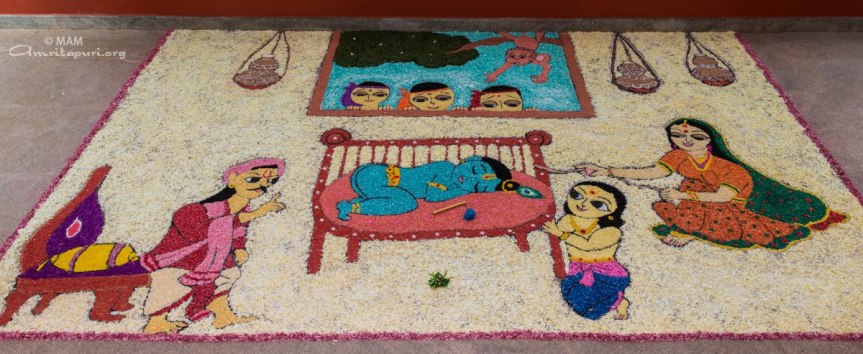
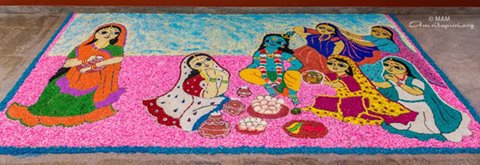
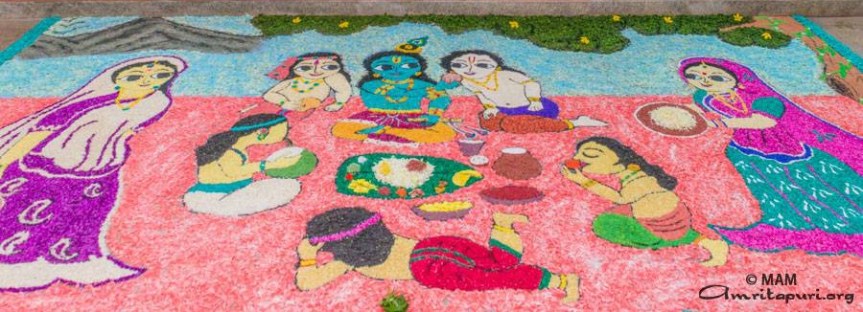
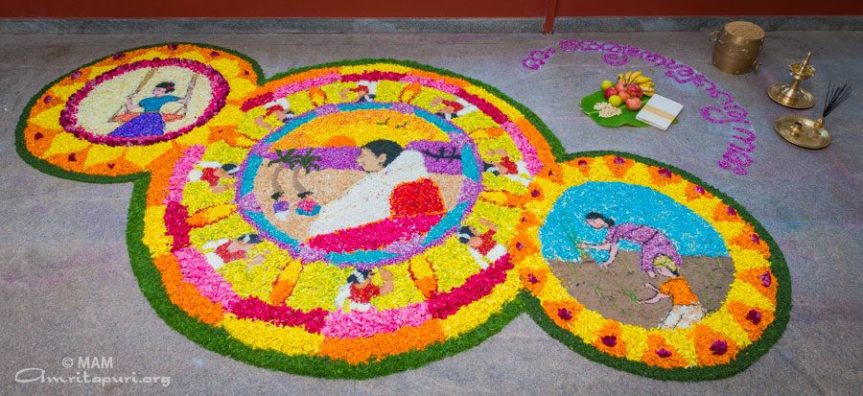
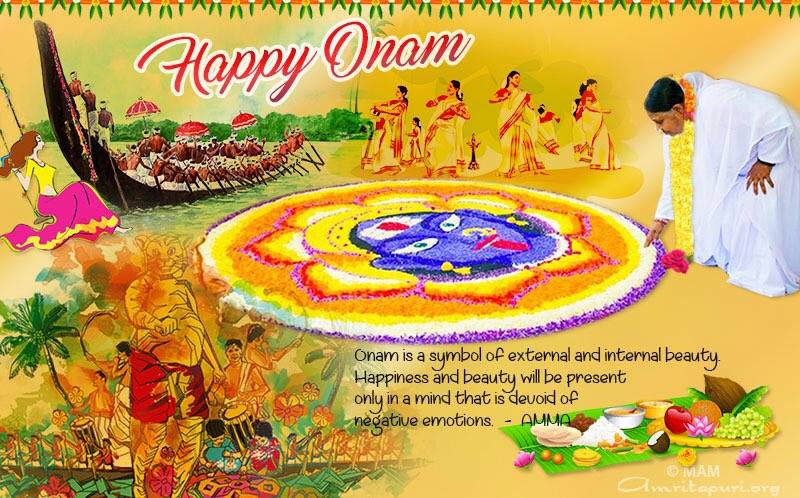
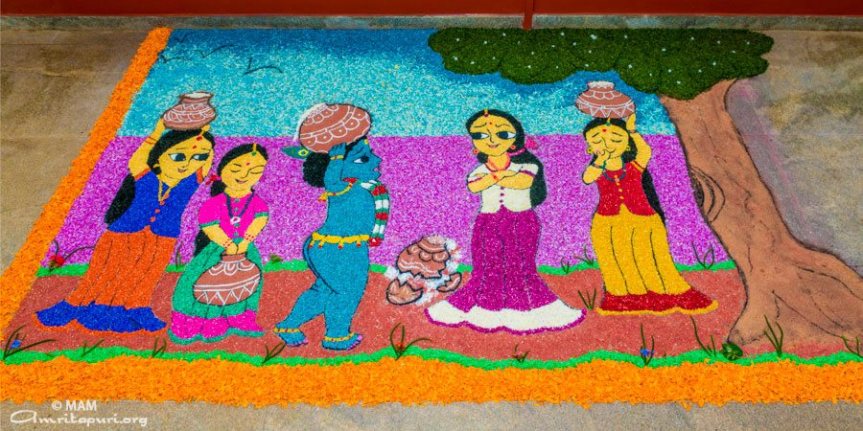
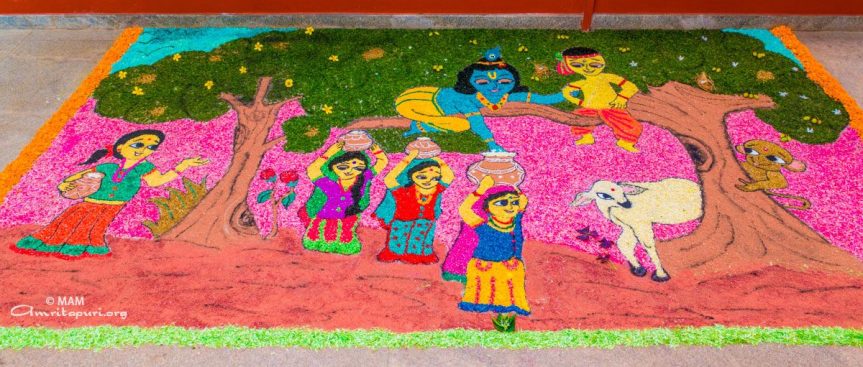
In recent posts, I have shared the pookkallams, artwork made from flower petals, that were constructed in front of Amma’s house each day leading up to Onam. Here are the most recent ones.

This was the pookkallam on Onam morning, September 4.

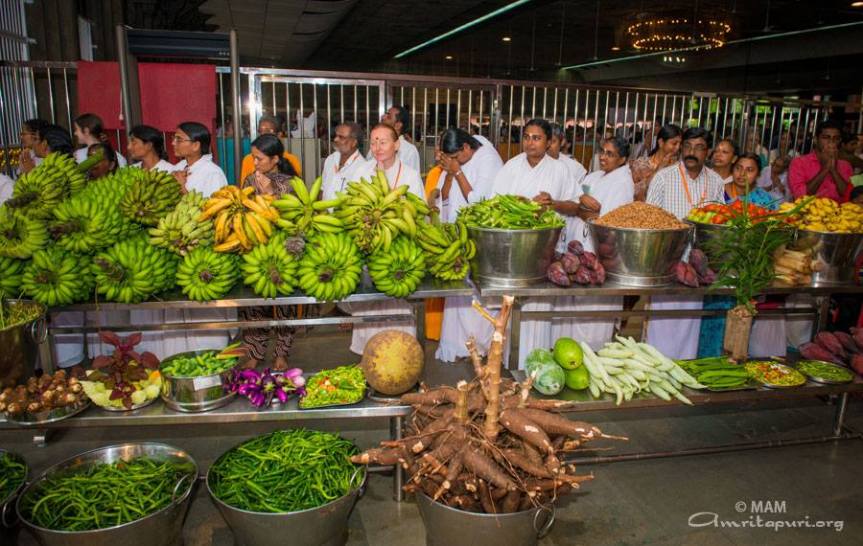
I hadn’t seen it at the time it occurred, but when I looked for the pookkallam photos on the Amritapuri Facebook page, I  learned that on Sunday a display of organic produce from the ashram gardens (which would be used in cooking the Onam dinner) had been created so that Amma could see the harvest.

Onam is a harvest festival that is similar to our New Year’s Day combined with Thanksgiving Day. This year, it took place on the day after Ganesh’s birthday. I woke up that morning exhausted and grouchy. My high of the day before had crashed.

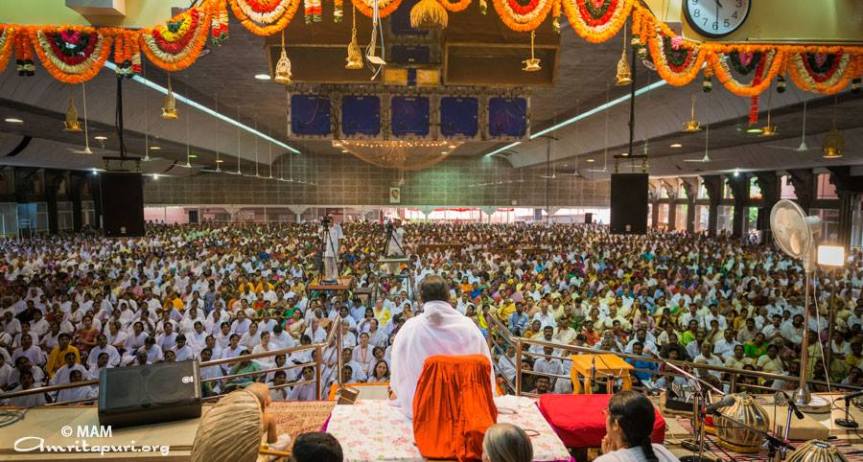
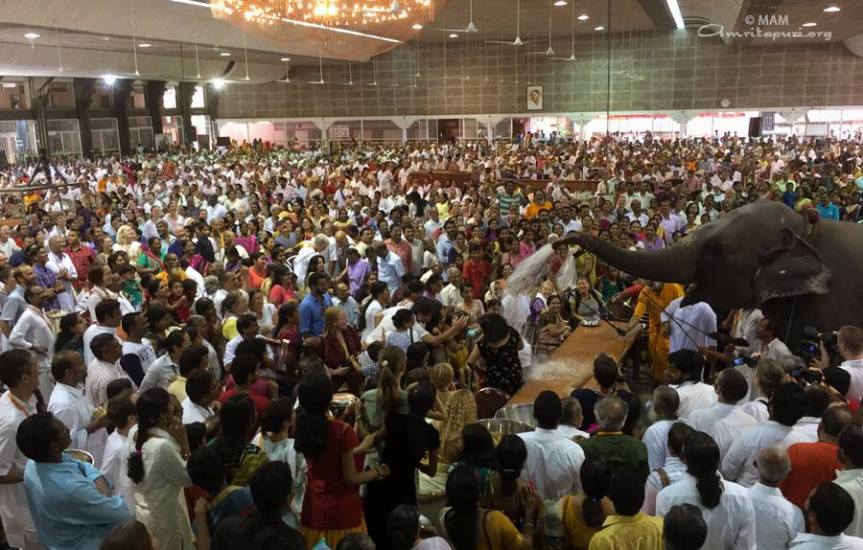
The Onam crowd was enormous and the auditorium was packed to capacity. Awnings had been set up on three sides of the auditorium so that people who couldn’t get in could stay out of the sun. Seats had been added to those areas and they were all filled with devotees.

When I arrived at the program, a swami was giving a talk in Malayalam. I found a seat and sat for awhile but realized I was too tired to be there. I went back to my room and lay down. I didn’t sleep but it still felt like the right thing to do. I couldn’t even make myself get up when Amma started her talk. Eventually, I decided to go downstairs for the last part of it. Just before I arrived at the auditorium, Amma started to sing a bhajan. Yay!

[I read Amma’s talk later. If you would like to read it too, you can find it here.]

I enjoyed that song, and hoped for more of them, but Amma started a meditation when it was over. I knew that even if I could find a place to sit, I would just nod off so I stayed standing. When the meditation was finished, I noticed people standing up and moving towards the front of the room.

I soon realized Amma was going to sing again and had asked the devotees to dance. That perked me up and I came closer to the front of the auditorium. I perked up even more when I realized she was going to sing Amrita Vahini, one of my favorite bhajans. In fact, that song is one that I can count on to transform my mood.

I still remember a time in the early 2000’s when I walked into the temple on a day that Amma was passing out lunch. I was feeling down and was wondering why I was in India. I wanted to go home. Amma started singing Amrita Vahini while she was serving us lunch. By the time we had finished the song, my bad mood was gone and I was wondering why I wasn’t making plans to live there permanently. I couldn’t even remember why I had been so down the hour before.

The song worked its magic this time too. By the end of it, my exhaustion and negativity were gone.

Next, Amma started giving darshan (i.e. hugs) to part of the crowd. I knew that the darshan segment was going to be quick that day but I was still surprised when I looked up at a nearby screen soon thereafter and saw that she had already started serving lunch. Since on Tuesday’s, Amma now serves lunch to each resident by passing the plates to everyone via a series of human chains, I had assumed that would be the procedure for Onam too. But I was wrong; Amma individually handed a plate of food to everyone in that huge crowd.

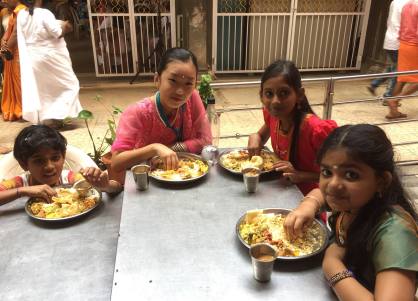
I’m hoping I will be able to show you a photo of Amma serving the food in a future post, but here is one of some children enjoying their lunch. The cups have a sweet pudding in them. [In Kerala people usually eat with their hands rather than utensils.]

Another difference between the weekly Tuesday lunch and this holiday meal was that people ate it when they received it rather than waiting until everyone was served. I was sitting with my friends Eswar, Vandya and Manaswini. Once we had our plates, we were directed to eat in the student dining hall. That was a very nice experience and further elevated my mood.

As soon as Amma fed those thousands of people, she walked down to the floor of the auditorium. Lakshmi, the ashram elephant, had already been brought into the auditorium. Amma fed her handful after handful of fruit and a lot of leftovers from the meal. She does that by putting everything directly into Lakshmi’s mouth. That was an easy task when Lakshmi was young. Now the elephant is so big, Amma has to stretch to get the food in.

One of the fun things that happens when Amma feeds Lakshmi is that she plays with her. Sometimes Amma hides bananas behind her back and before long you can see the elephant’s trunk start to search behind Amma. She eventually finds the bunch of bananas. Amma also directs Lakshmi to pick up all of the crumbs from the floor, i.e. clean up her mess. It is amazing to see her do a pretty good job of completing that chore.

Another fun thing that happened after Lakshmi finished her meal was that a tub of water was brought into the area. Lakshmi drank some of it and then started spraying people in the crowd. She did that over and over again. Once she finished spraying the water in one tub, another tub of water was brought to her. The amount of water Lakshmi can spray has certainly increased with her growth. The people she chose really got a shower.

After the time with Lakshmi was over, Amma returned to the stage. I wondered if she was going to start to give darshan again but soon discovered I was in store for another treat. Part of the room was cleared and a series of tug-of-wars started. I’d never seen that here before.

The first of many tug-of-wars were between groups of men. They kept trying to even up sides by sending part of the men over to the losing side and/or by adding more men. At least 50 men participated and probably more. It was fun and funny to watch. After some time, the brahmacharinis (women monks) did it. That was also fun and even more funny. During the entertainment program that happened later that night, slides were shown from the tug-of-wars. Everyone laughed again. I sure wish I could show you some of those photos but I doubt I will ever have that opportunity.

The morning/afternoon festivities were over about 4 and Amma went back to her room. I also returned to my room and laid down. The next thing I knew, it was 7:30 p.m. and Amma had already been singing evening bhajans for an hour. I couldn’t believe I had slept that long or that deeply.

I walked to the auditorium and participated in singing the last bhajans of the night. During the Arati that followed something happened that I had never seen before. [During Arati, a brahmachari or swami circles a camphor flame in front of Amma.] At one point, I closed my eyes. When I opened them again, I saw Amma circling her arm as if she was circling an Arati flame in front of us! She had a beautific smile on her face. Whenever Amma arrives at a program, she bows to us. I think she was doing the same thing when she was circling her arm as if she was performing the Arati to us.

Amma returned to her room after the program. She had given darshan until after midnight on Sunday night and then come to the Onam program around 10 on Monday morning. She had been with us all day, took less than a two hour break and then come back for two hours of devotional singing. You might think that she would call it a day, but not so. About an hour later, she came to watch the Onam entertainment with us and stayed until 11:15 p.m.

I went back to my room soon after Amma  left. What a full day it had been. And such a good example how emotions are transitory. A day that had started with me being tired and grouchy had been full of fun. I went to sleep happy and content.


Most of the photos in this post came from the Amritapuri Facebook page. Many photos were taken that day so I suspect there will be more available on amritapuri.org in the next few days. If that happens, I will provide links to them in future posts on my blog.

To view the previous posts in this series click here.

My Ganesh Chaturthi Experience

I continued attending the Ganesh bhajans in the Kalari from 9-10 each night. All in all, it was nine nights of pure bliss for me as we sang the rocking, high intensity songs. How I have yearned to return to the days when bhajans affected me that way. Two or three of those days, I even sat cross-legged on the floor for the whole time although I asked someone for a hand when I wanted to get up at the end. For one reason or another, I’ve needed to sit in chairs at programs for several years so was excited to see that I could once again be comfortable sitting in the middle of a bhajan group.

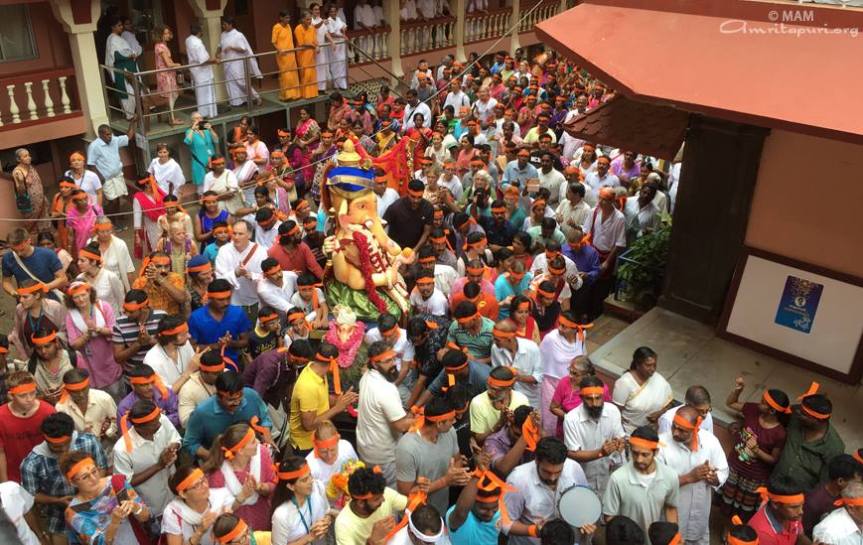
Then on Sunday, the big day arrived. It was Ganesh’s birthday, the culmination of the ten day celebration. At 3:30 in the afternoon, devoteese gathered near the Kalari for the procession. We put on orange headbands and placed sandlewood paste and red kum kum on our foreheads, slightly above the junction between our eyebrows. Once we did that, we were instructed to have a seat in the Kalari.

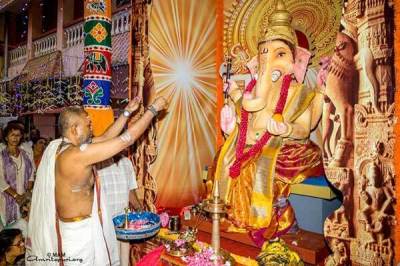
I sat down in a place that was near perfect. (The photo at the top of this post shows the view I had even though the photo was taken on a different day.) I knew I was in an ideal location for the singing that was to come prior to the procession. I was torn though, because I also knew that Lakshmi, the ashram elephant, was in front of the temple and soon I could hear the sound of the horns and drums that have been associated with Hindu festivals since antiquity coming from there as well. I didn’t want to miss anything. Then, to make it even harder to stay put, the sound of big drums being played began. I stayed where I was, choosing to have a slightly delayed gratification.

Before long, I could tell that the drums were coming our way. They got louder and louder. I was so excited. Simultaneously, the bhajans began. By now, most of the songs were familiar to me. I was in bliss. I don’t remember how many we sang but before long it was time to begin the procession.

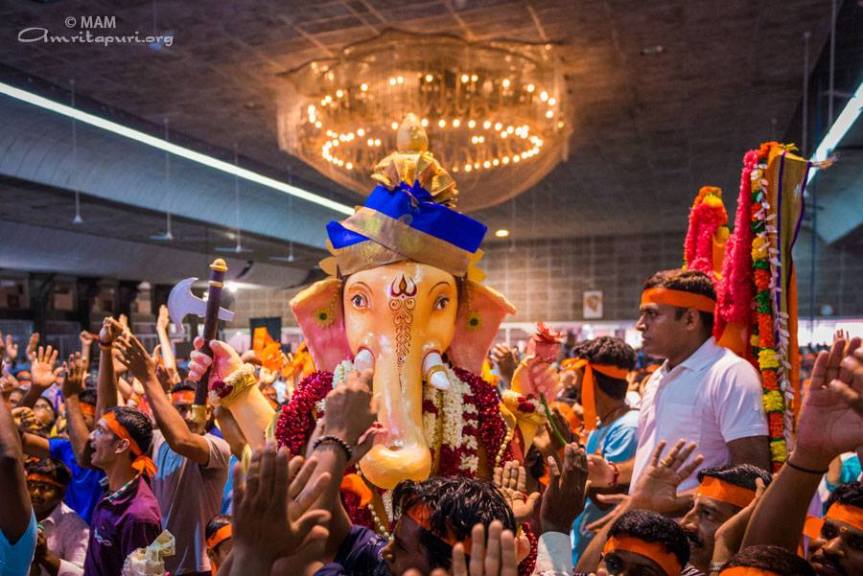
The big and heavy statue was moved to a decorated cart. That was quite a feat. As soon as it was ready, two men got onto the cart behind it and some others began to pull the cart. The procession had begun.

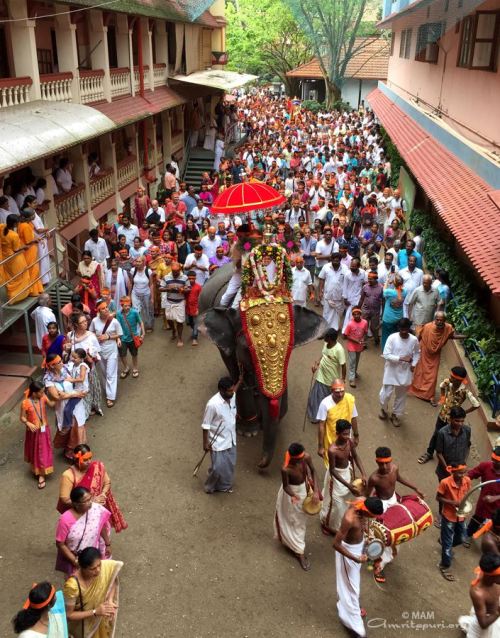
After leaving the Kalari, we walked to the courtyard in front of the temple where Lakshmi and the two devotees who were riding her were waiting.

Lakshmi and musicians with ceremonial instruments lead the procession.

We wound our way towards the auditorium, where Amma was giving darshan, singing the whole time.

When I started the procession, I was walking with a friend who prefers to be on the outskirts of crowds. I soon realized that this experience was one of the main reasons I had come to Amritapuri this time, so I darted into the crowd and made my way to the front where I could be in the thick of things. As I reflect on it now, I find that interesting. I always want to be on an aisle seat on a plane or in a theater, because I don’t like getting hemmed in. But this was different. I wanted to experience every drop of what it was possible for me to experience.

Soon, Ganesh was in front of Amma.

After leaving the auditorium, we headed towards the beach. Normally that would be a five to ten minute walk but we walked slowly. People lined both sides of the streets and pathways, watching as we walked by. Every so often the procession would stop and the singing and dancing would intensify.

When we made it to the beach, Lakshmi and the musicians waited on the beach…

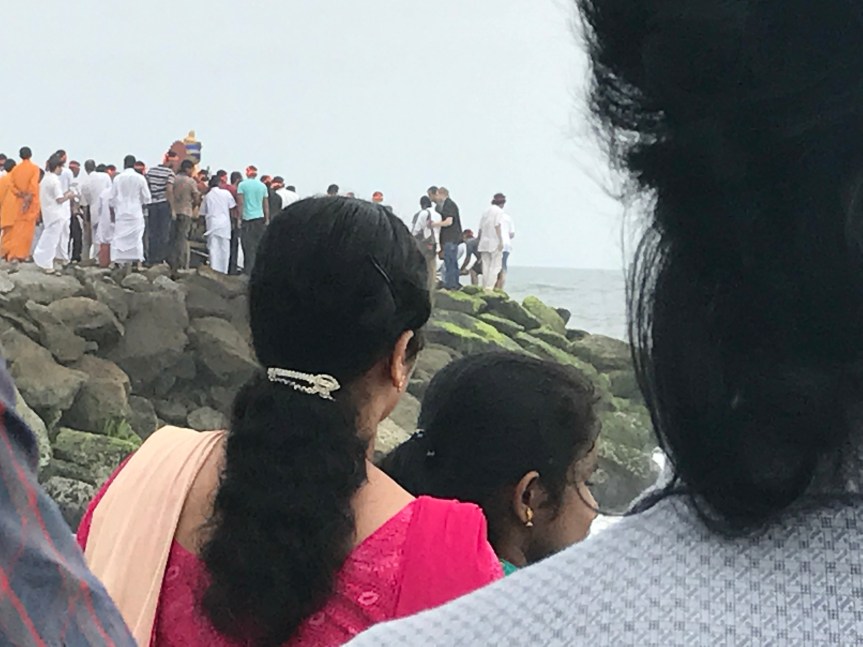
… while a smaller group of devotees took the Ganesh statue out onto a rock jetty. There he was dropped into the ocean so the clay he was made from could dissolve and his essence return to Mt. Kailash, his heavenly abode.

The crowd spread along the coast line to see the immersion as best they could. After Ganesh had been taken by the ocean waves, everyone dispersed and made their way back to the ashram. I felt happy and full.


Most of the photos in this post came from the Amritapuri Facebook page. Many photos were taken that day so I suspect there will be more available on amritapuri.org in the next few days. If that happens, I will provide links to them in future posts on my blog.

To view the previous posts in this series click here.

Amritapuri Sunrise

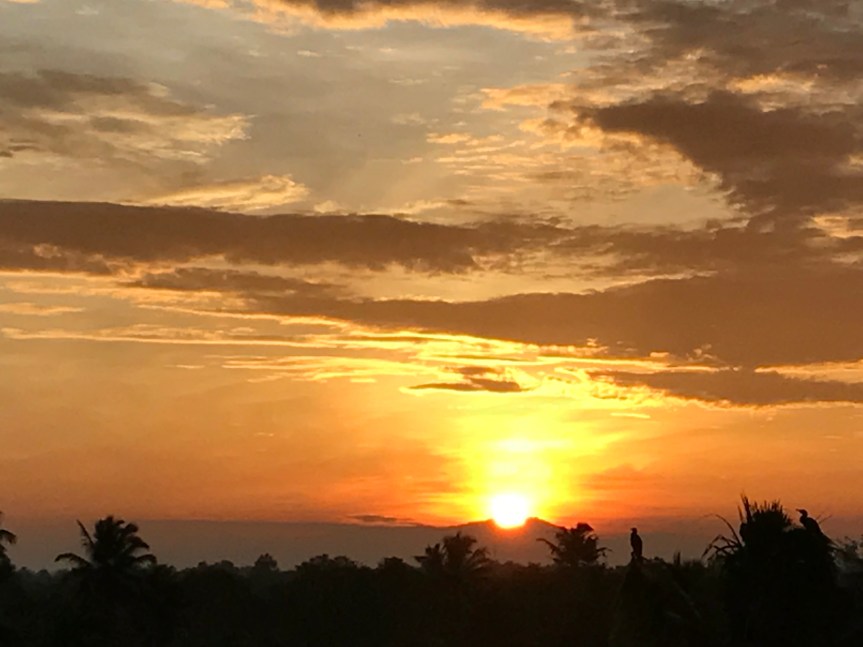
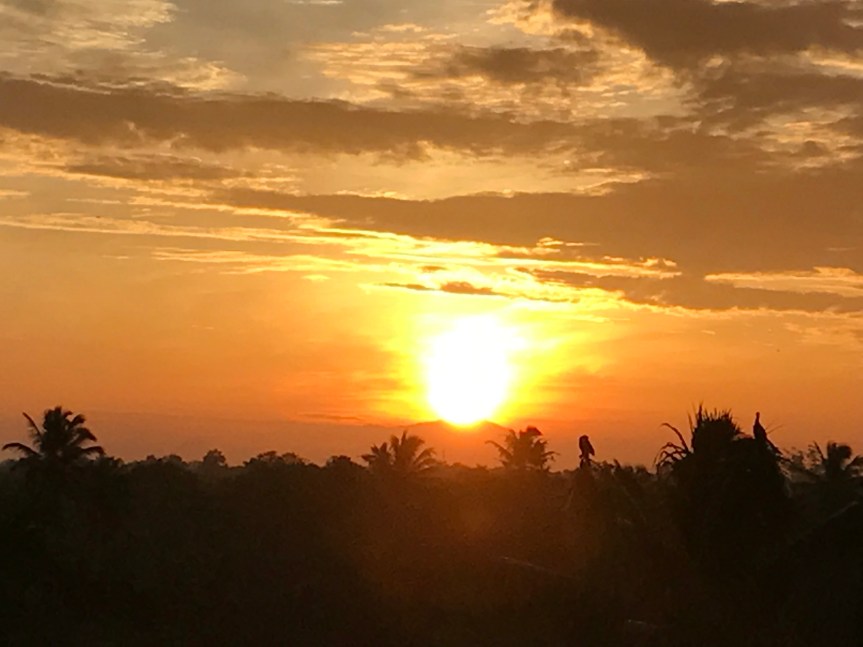
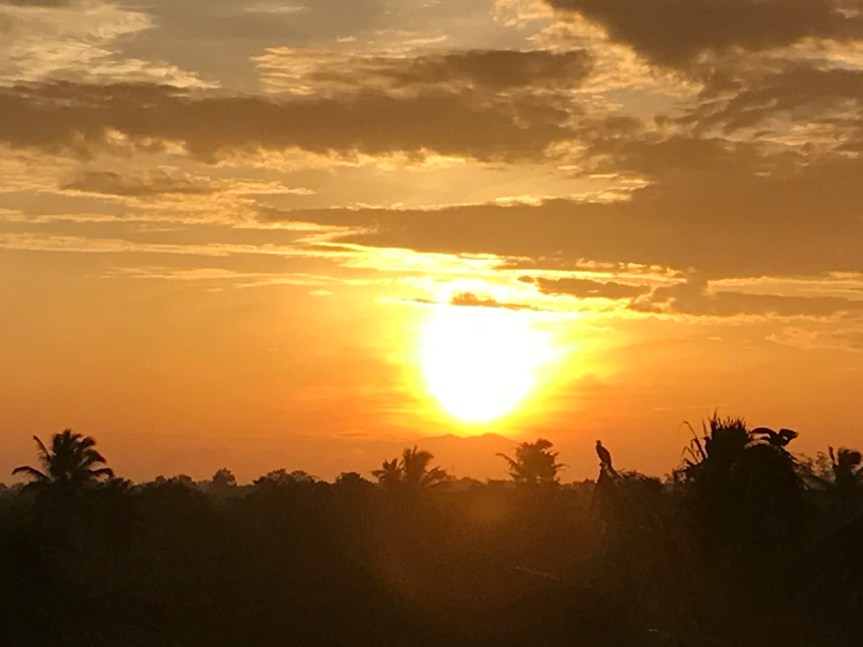
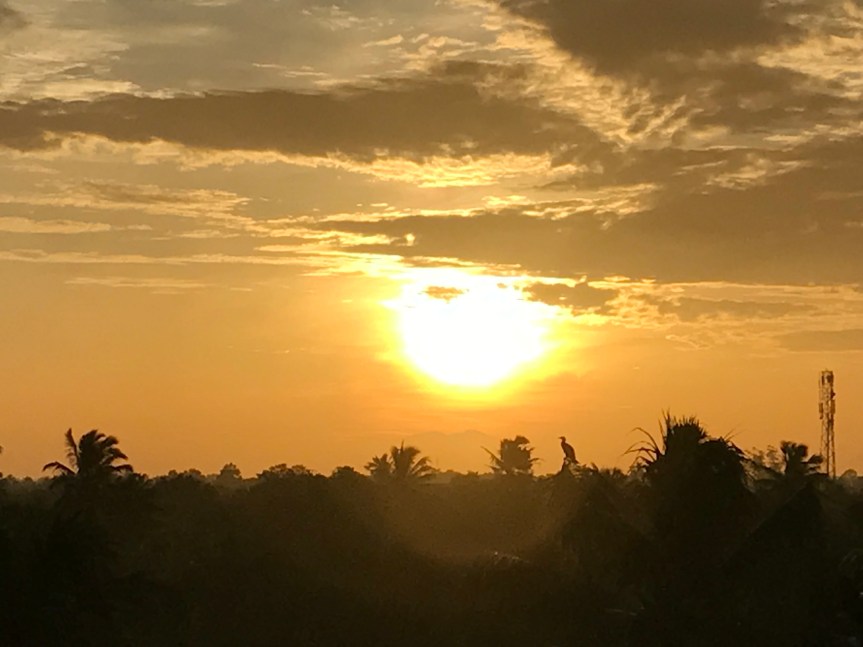
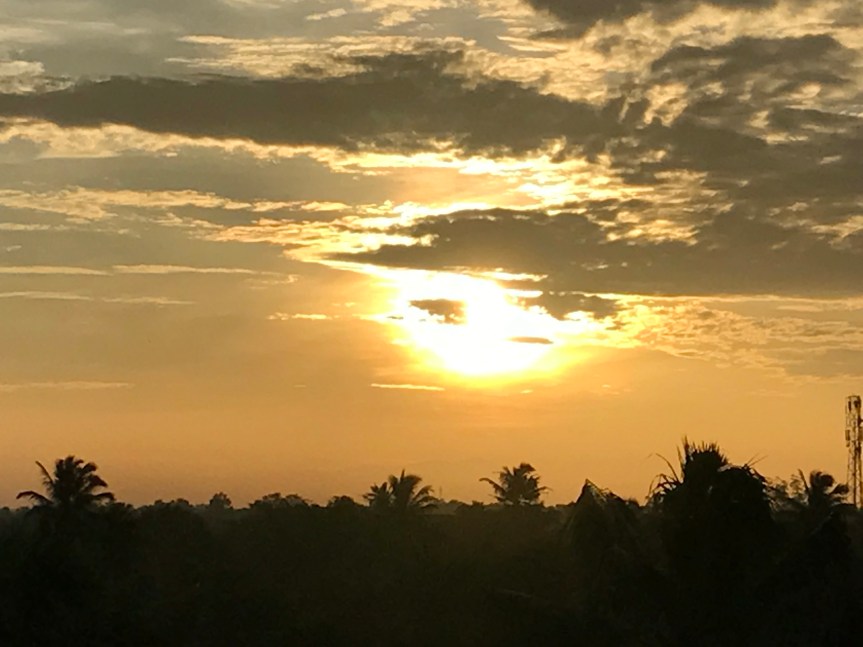
This morning I decided it was high time for me to watch the sunrise. And what an experience it was.

6:02
6:06
6:10
6:17
6:20
6:22
6:24
6:27
6:32
6:37
6:53
6:53

I can’t believe that it took me three weeks to open the curtains of my room first thing in the morning so that I could see the beauty of the sunrise. What a metaphor that is for life. We miss so much because of the blinders we wear.

Quite a few of the photos I took towards the end of this series had a blue orb in it. I’m thinking the camera may have been reacting to the blinding light of the sun, although that is only a guess.


To view the previous posts in this series click here.

Amritapuri Sunsets

My friend Prarthana sent me stunning photos of the sunsets she took here the last two nights. I asked for, and received, permission to share them with you. Enjoy!

August 30

August 31

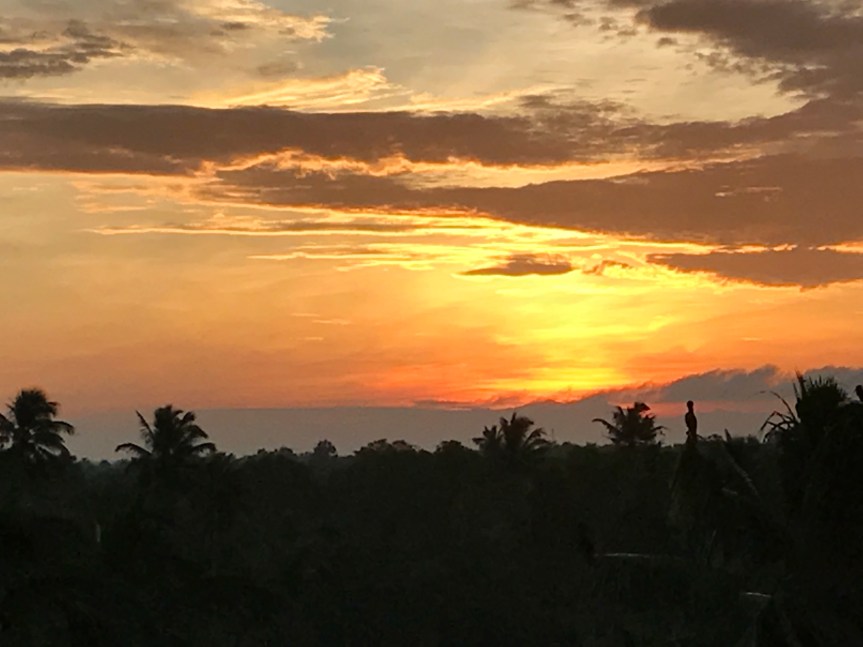
When I got off the elevator on my floor tonight, I was blessed with the sight of a gorgeous sunset. I took a photo so I could add it to this series. The picture looks essentially the same as what I saw with my eyes. Generally, the colors on my sunrise and sunset photos are muted. I’m so happy with this one.

September 1


To view the previous posts in this series click here.

Living and Learning in Amritapuri, India: August 28-31, 2017

Ganesh Celebrations

I have continued to attend the Ganesh bhajans in the Kalari from 9 to 10 each evening. I love, love, love the high intensity, ecstatic music. The only reason I’m not sad that it will end on Sunday is that Onam and Krishna’s birthday are coming soon.

I love participating in the procession that goes to a nearby temple on Krishna’s birthday. The college students and brahmacharis do the same style of singing on that occasion that I’m hearing during Ganesh’s celebration, so I have that to look forward to. However, I’m also keeping in mind that the last time I was in Amritapuri on Krishna’s birthday, my back went out a few days before the big day and I couldn’t participate. I frequently remind myself that tomorrow’s not promised and do the best to make the most of today.

Onam

A few days ago, I heard someone say that Onam is like a combination of New Year’s Day and Thanksgiving. I liked that way of thinking about it. Daily pukkallams are still being created near Amma’s house in honor of Onam. During my last “Living and Learning” post, I shared photos of the first three. Here are photos of the four newer ones. (The artwork is all made from flower petals.)

Healing

The skin near my eye is completely healed and I’m off of all medication for that. I am able to take my wrist splint off part of the time I’m in my room. There is too much chance I will get bumped when I go outside so I almost always leave the splint on when I leave the flat.

I am focusing on using my right hand more. When I do anything with my left hand, I’m making a point of having my right hand participate whenever possible. The strength and flexibility in my injured hand is no where near “normal” but I think my recovery is progressing well.

Rain

It has been raining several times a day for the last week. The rain makes everything so much cooler. I have no doubt that people in Seattle would like to have some of this rain.

Temple

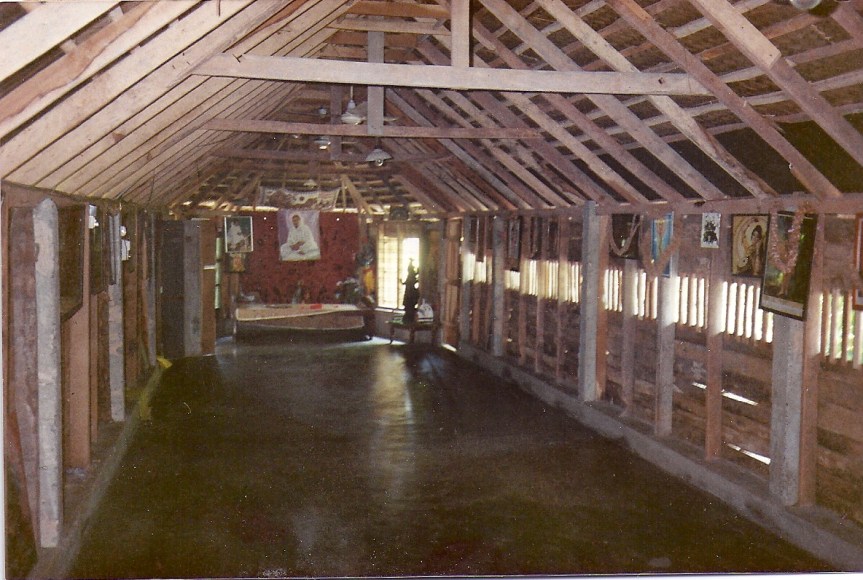
The public program on Wednesday was held in the temple rather than the auditorium since the crowd was smaller than normal. When we are in the temple, it brings back so many memories of my early visits to Amritapuri. Here are some temple photos from 1990. (Click any of the galleries to enlarge the pictures.)

Darshan was held in a small hut in those days. Everyone didn’t fit inside so there was a line of people waiting outside to get in. It wasn’t a long line though. This is a picture of the darshan hut.

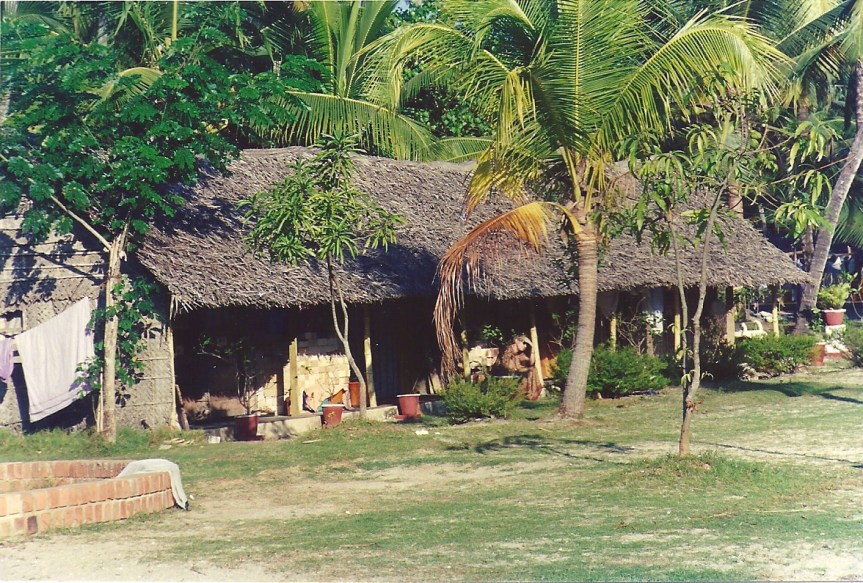
Most visitors lived in a small guest house above a print shop or in rooms in the temple. The residents lived in thatched huts.

For many years, we took a taxi from the airport to Vallikavu, the town across the backwaters from the ashram. We then boarded a canoe to get to the ashram. This was the view we saw as we got close.

The construction of the first four floors of the temple was completed just before I arrived in 1990. I remember sitting in the temple on days when there was no public darshan and noticing that we all fit into the first third of the room. I wondered why Amma built a temple so big. It didn’t take long for me to realize Amma knew what she was doing. This is what the crowd looked like by the mid-90’s.

Eventually, Amma built an auditorium and flats to accommodate the growing number of people coming to Amritapuri. Here are a few views of what the ashram looks like today.

Current Events

I am looking at CNN as much here as I do at home, or at least close to it. I sense it is important for me to stay aware of events that are happening in the world. I was at the ashram during the 2004 tsunami and during Katrina in 2005. The flooding in Texas is bringing back those memories.

I feel so sad about the loss that people in Houston and other areas in my country and the world are experiencing due to Harvey and other natural disasters. I feel many emotions around the fact that so many people in power in the U.S. can see the magnitude of these storms and still deny the existence of climate change.

Tai Chi

Thursday was my last day of Tai Chi as the teacher was returning to Barcelona. I am sorry that it ended, but feel very grateful that I had the opportunity to take 12 classes with him.

Quote and Photo from North American Summer Tour 2017

The circumstances of life will always keep changing. Change is nature’s unchanging law. However, it is we who make experiences bitter or sweet — our mind and our attitude. As long as we are unable to bring our mind under our control, sorrow will continue to hunt us down. However, once the mind comes under our control, then no problem or tragedy can devastate or paralyze us. In reality, the foundation of happiness is gratitude. When the mind becomes filled with gratitude, we will spontaneously become happy.” -Amma in New Jersey, June 29, 2017.


To view the previous posts in this series click here.

Wordless Wednesday

To view the previous posts in this series click here.

The Fascinating Naga Linga Tree

On Sunday, when I was waiting in line to be admitted to a wedding feast, a nearby tree caught my eye. The flowers were fascinating. I soon realized a young man standing near me was talking about the tree. He said it was called Naga Linga and was a very sacred tree. He mentioned that the tree had that name because the flowers look like the hood of a cobra (naga is the Sanskrit word for snake). Later, I learned that another name for the tree is Shiva Linga and that they are often planted near Shiva temples. The tree is also sacred to Buddhists. (Click on the gallery below to enlarge the pictures.)

There were only a few flowers on the tree in Amritapuri. I hope someday I will be here when all the buds are open. It must be a stunning sight.

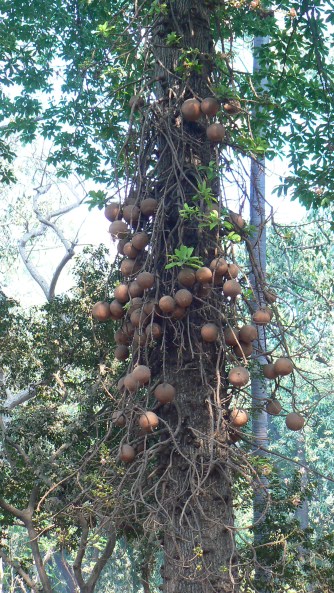
The English name for the tree is Cannonball. The reason for that becomes obvious when you see the fruit. I found these photos on Wikimedia.

Photo Credit: Wikimedia

The fruit can reach a diameter of 10 inches. When one falls to the ground it may cause a loud explosive sound. The fruit usually cracks open at that time. The pulp inside is edible but humans often don’t like the smell so it is usually eaten by animals.

Photo Credit: Wikimedia

Wikipedia says this about the tree’s medicinal value:

There are many medicinal uses for the plant. Native Amazonians use extracts of several parts of the tree to treat hypertension, tumors, pain, and inflammation. It has been used to treat the common cold, stomachache, skin conditions and wounds, malaria, and toothache.[5] The fruit pulp is rubbed on sick dogs to cure them of mange.[10] Laboratory tests show that extracts of the plant have some antimicrobial activity and inhibit the formation of biofilms.[5]


References:

Couroupita guianensis

The weird and mysterious Naga Linga or Shiva Linga tree

To view the previous posts in this series click here.