We have found so many interesting items buried in the dirt of the Greenbelt site we are restoring. One of these items I found today and one was found by University of Washington students on May 13.
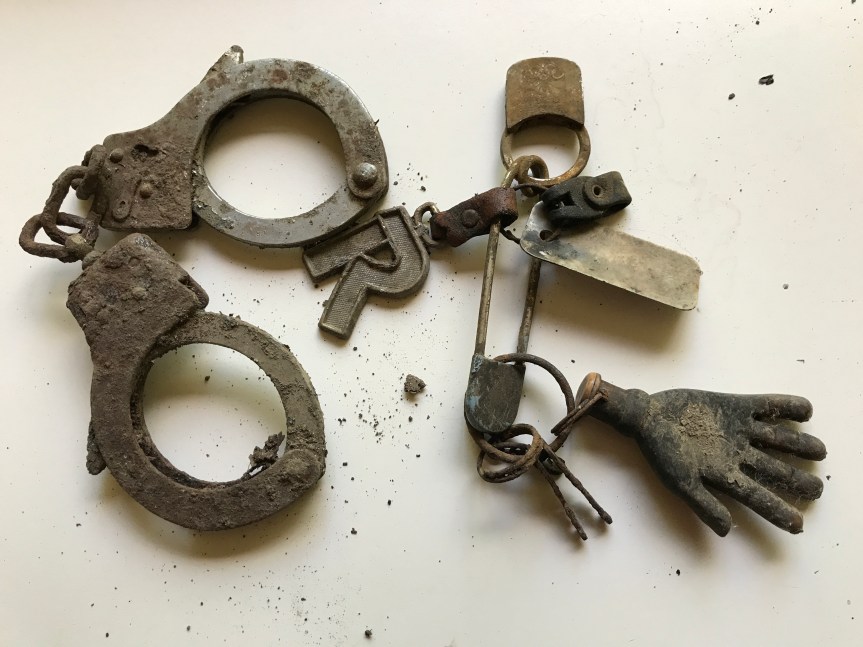

We have found so many interesting items buried in the dirt of the Greenbelt site we are restoring. One of these items I found today and one was found by University of Washington students on May 13.

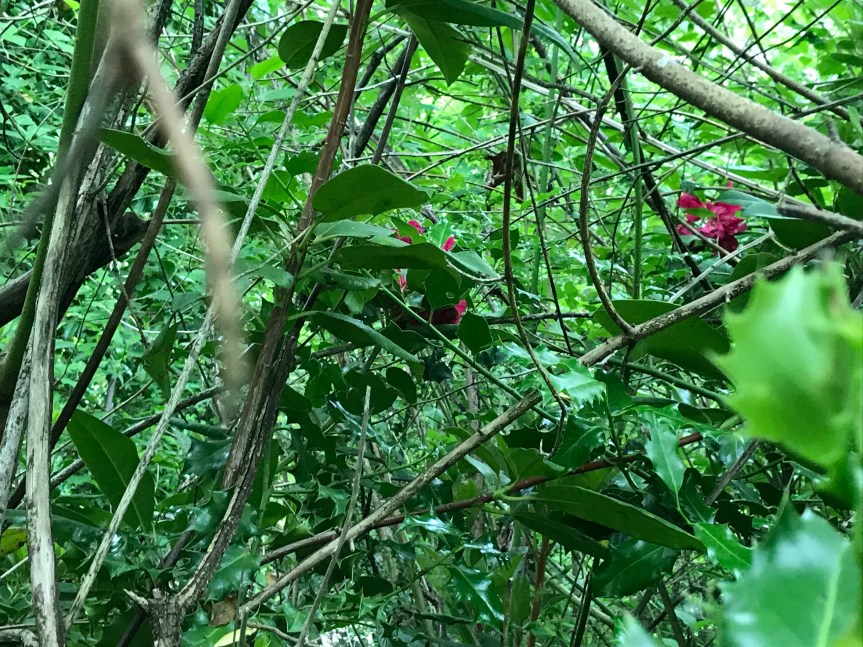
When I was showing a friend around our Greenbelt restoration project on May 25, she saw a red flower in the distance. It was too far away, and too covered by invasive plants, to know what it was. We guessed it was a rhododendron flower. (Mystery in the Making).
At the time, I was in the midst of preparing for Amma’s programs so wasn’t able to make my way to the flower. Last Saturday, I decided to do whatever it took to get close. I gathered my tools and headed for the thicket. I took the photo above just before I began to cut my way through the dead branches, blackberry vines, laurel, ivy, and downed trees.
As I worked, I realized how much I missed the excitement of freeing the trees in the Greenbelt and discovering what was under the mass of invasive plants. Most of our recent work has been to dig out blackberry root balls from areas where blackberry vines have been cut down.

Every so often I looked up to see how close I was to the red flowers.
I progressed much faster than I expected. At one point, I realized that a branch I cut was not laurel, it was a rhododendron branch. Soon I saw more rhododendron branches.
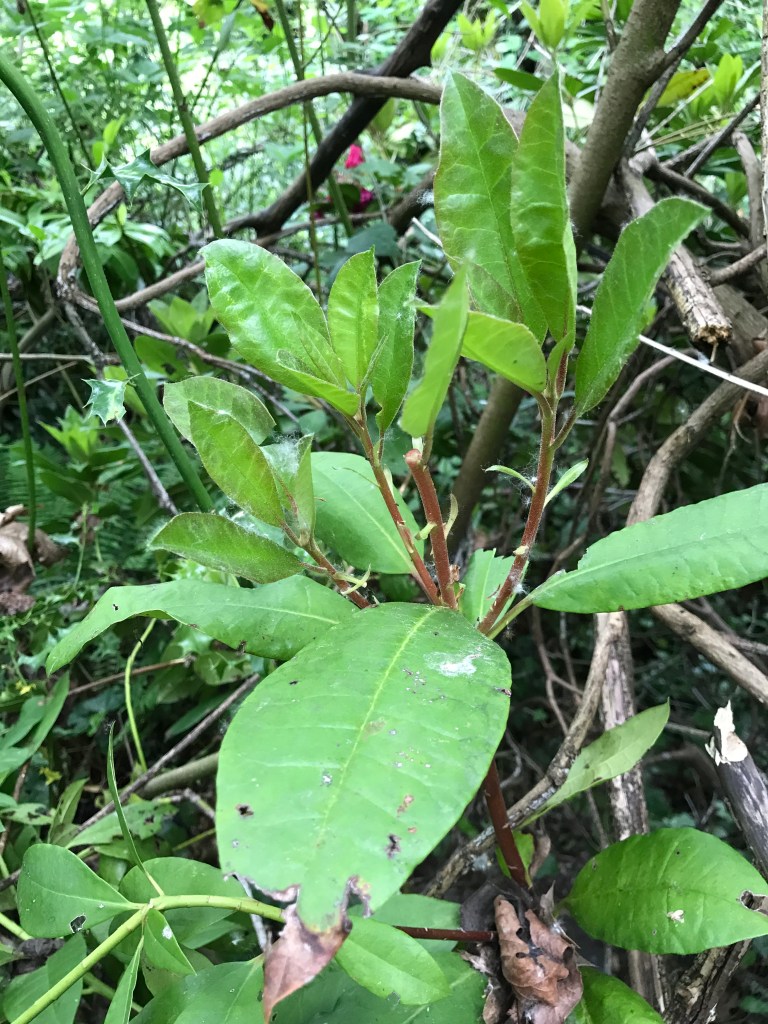
There is a steep slope along the eastern border of the property. For liability reasons, the City of Seattle does not allow us to work on slopes that steep. I noticed that the rhododendron was on the last piece of flat land before the slope began. I continued on my way, getting ever closer to my goal.


Closer and closer.

And then I was there. I knew there was no way I was going to free the whole bush, at least not on that day, but I was able to touch one of the flowers. I wish the photo was clearer but I’m glad that I have it. I realized if I had waited much longer to solve this mystery, all of the petals would have fallen off.
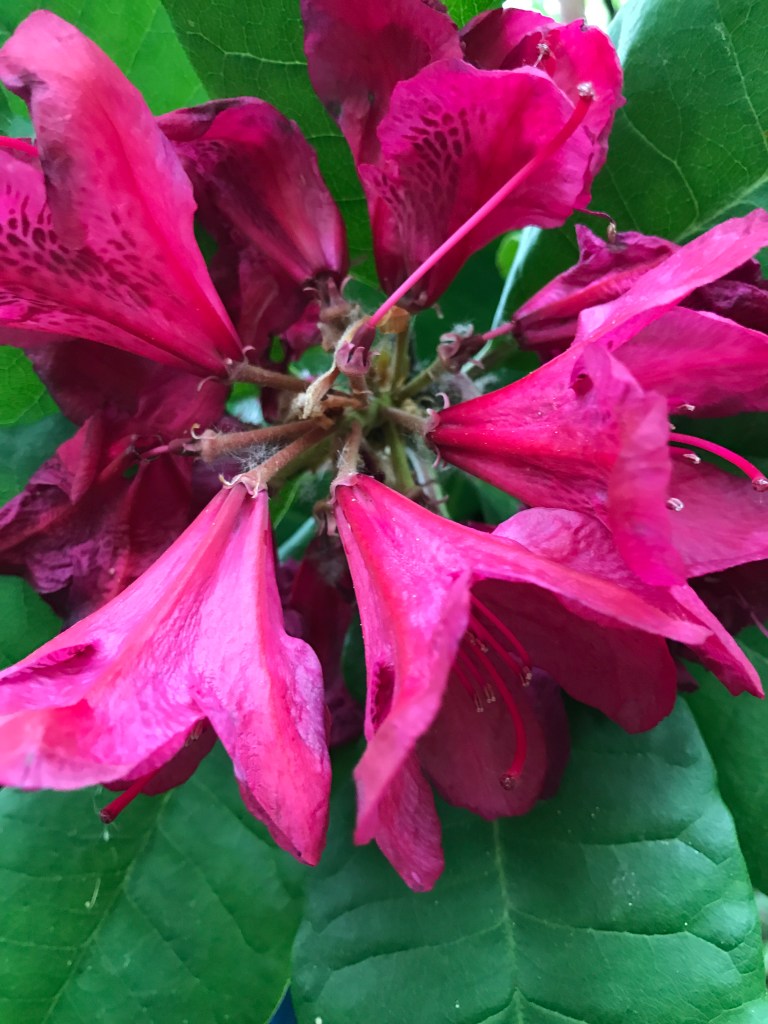
I looked up and saw this sight.


I also enjoyed seeing the rest of the bush.


There were so many branches, going every direction. They reminded me of a pretzel.

When I looked through the thicket, I thought I saw more rhododendron bushes. I wonder what other discoveries await me. I look forward to the time when we focus on clearing that part of the Greenbelt. For now, though, I will go back to digging out blackberry root balls!
On Thursday, when I was showing a friend the restoration work we are doing in the Greenbelt, she asked me about the red she was seeing through the trees. It was deep into an uncleared and presently unreachable part of the project and I had never seen it before. We walked as close to it as we could get, but still couldn’t identify it. Our guess was that it is a rhododendron bush. If so, it is a first on that property.
The next day, I walked back to that area to see if I could get closer. I could still barely see the blossoms. In taking an enlarged view, this is what I saw.

I walked a different direction to see if I could get a better view. From that vantage point, I could spot a bit of red, but it was very tiny. See if you can see it.

So much of the property has already been cleared of blackberry and ivy vines and other invasive plants. I am enjoying the thought of making new discoveries when we begin working on the remaining areas of “uncharted territory”!
These timelines profoundly affected me when I saw them at the Green Seattle Partnership Forest Steward training that Ananya and I attended last March.
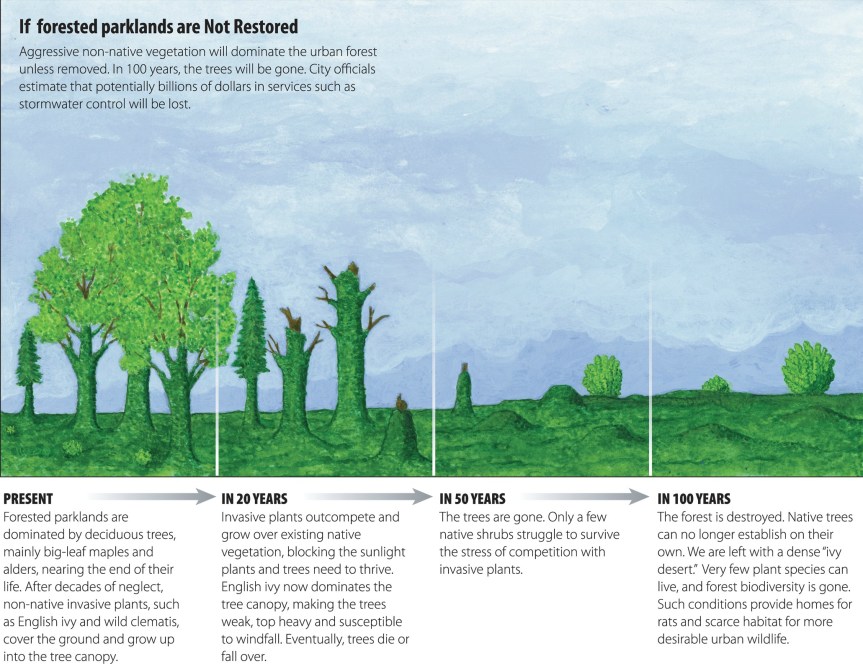
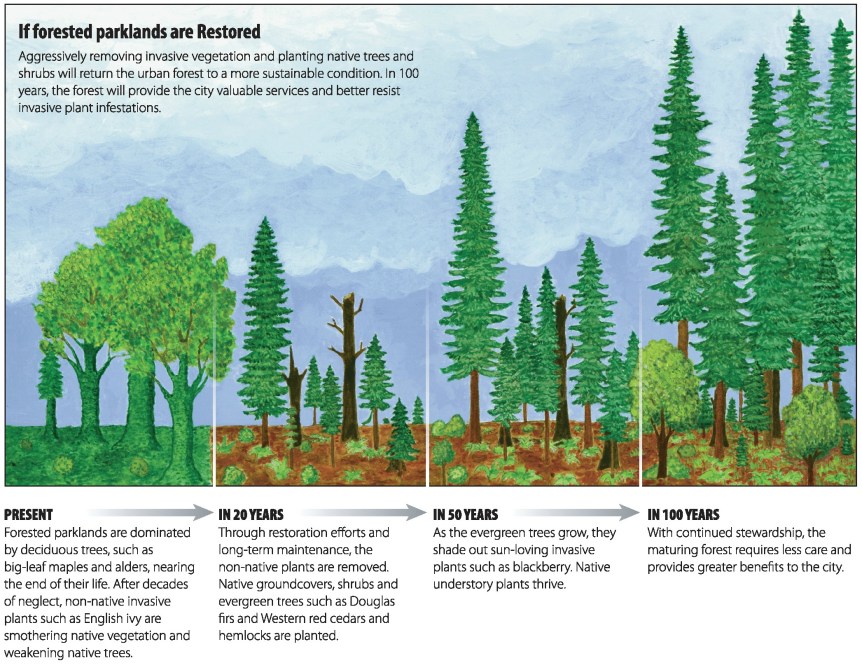
I choose to do whatever I can do to make the second timeline the reality.
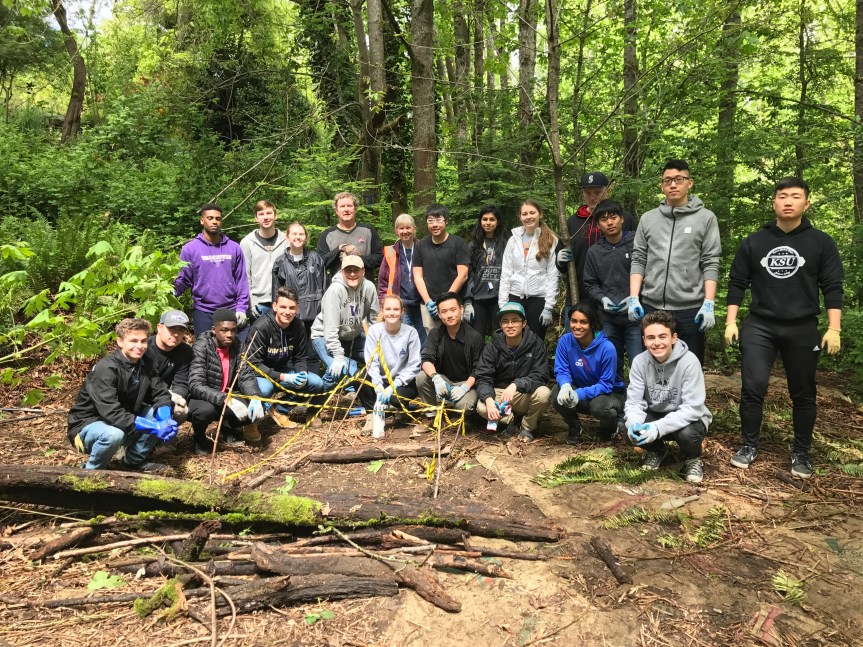
Twenty of the 23 participants in last Saturday’s work party were students from a University of Washington Environmental Studies class. I loved the opportunity to share this project with young people and appreciated what enthusiastic workers they were.
I set up five different work stations, and assigned four students to each of them. One group finished their work early so they joined another group for the remainder of the time.


Most of the work party was spent cutting down blackberry and ivy vines, and digging out blackberry root balls. Once the root balls were removed, we cover the cleared land with burlap bags to reduce weed growth. Then dried blackberry canes and other debris were placed on top of the burlap. In time, the bags and debris will turn into mulch which will hold in moisture and enrich the soil.
Since we use the blackberry canes to cover the burlap bags, it can be difficult for photographs to show how much work has been done. As you look at the before and after photos below, keep in mind that so many blackberry root balls are now above ground, stacked on racks made from tree branches where they will dry out.

Before and after photos for each of the five stations:
#1


#2


#3


#4


#5


The amount of trash that we collected during the last two work parties shocks me. I wonder it will ever come to an end.


As always, I was amazed and delighted by how much we were able to accomplish during a three hour work party.
The lots in the part of the Greenbelt our GreenFriends group is restoring were covered by blackberry vines for 30-50 years, depending on the lot. One of the first things we noticed after the blackberry canes were cut down was that there were remnants of ferns in the debris. We began to free them from the rubble and then flagged them with yellow and black tape, hoping to prevent workers from stepping on them. We started calling that area of the property the “Fern Field.”

I started watching one particular fern, and at times took photos of it daily.
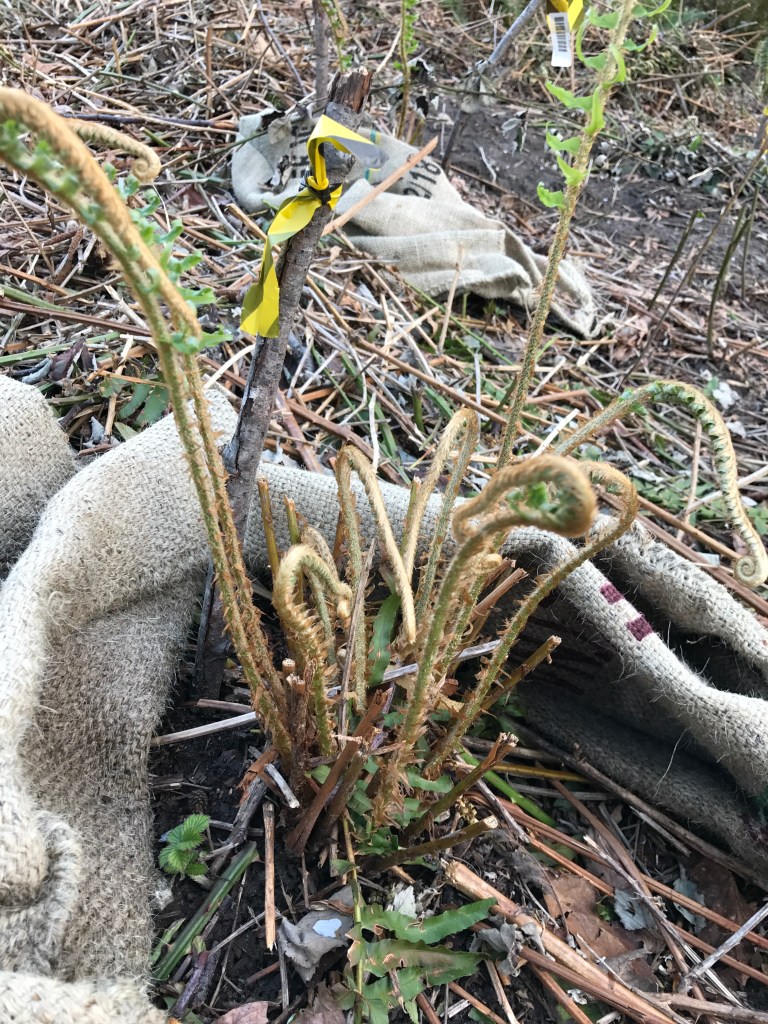
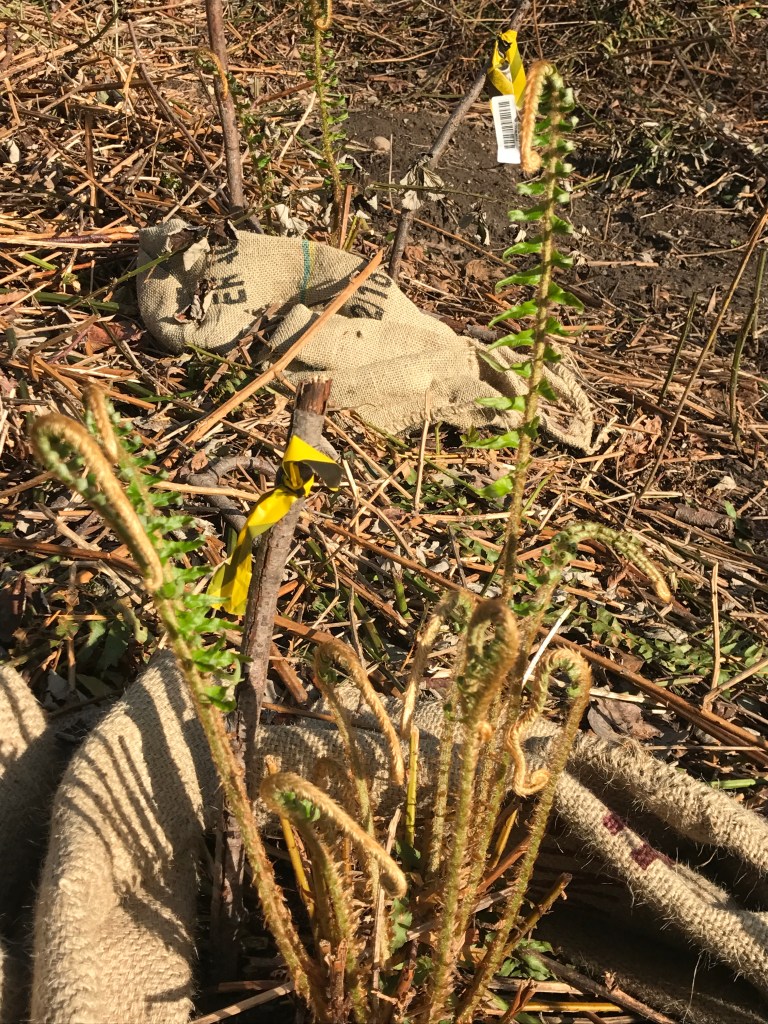
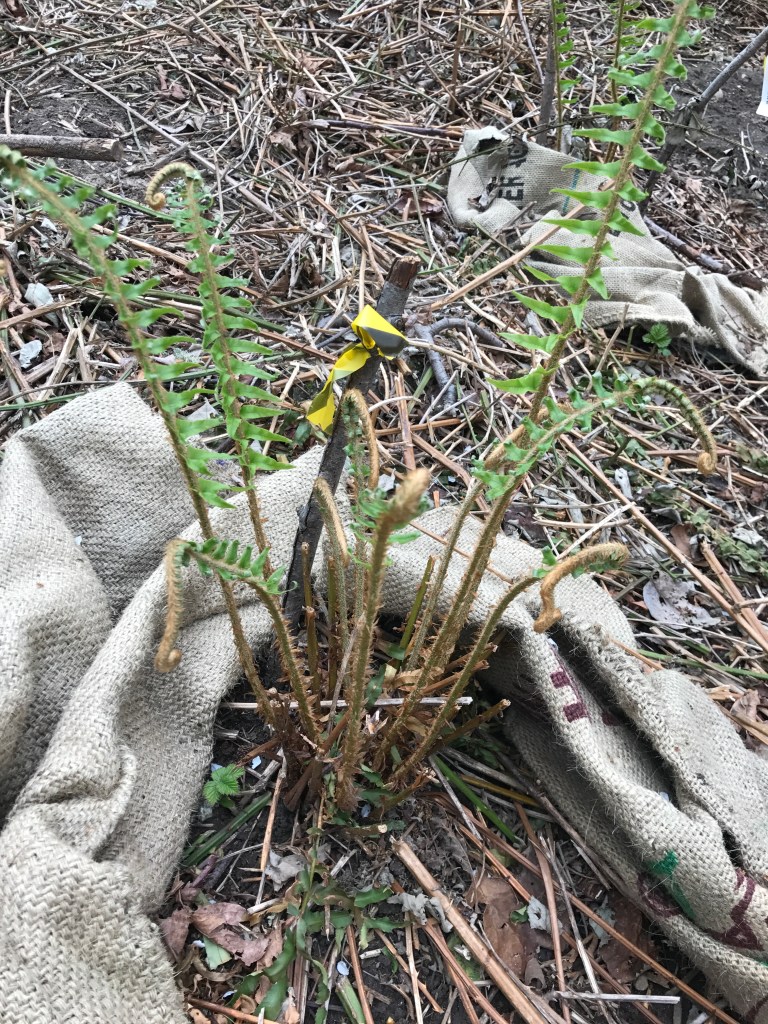
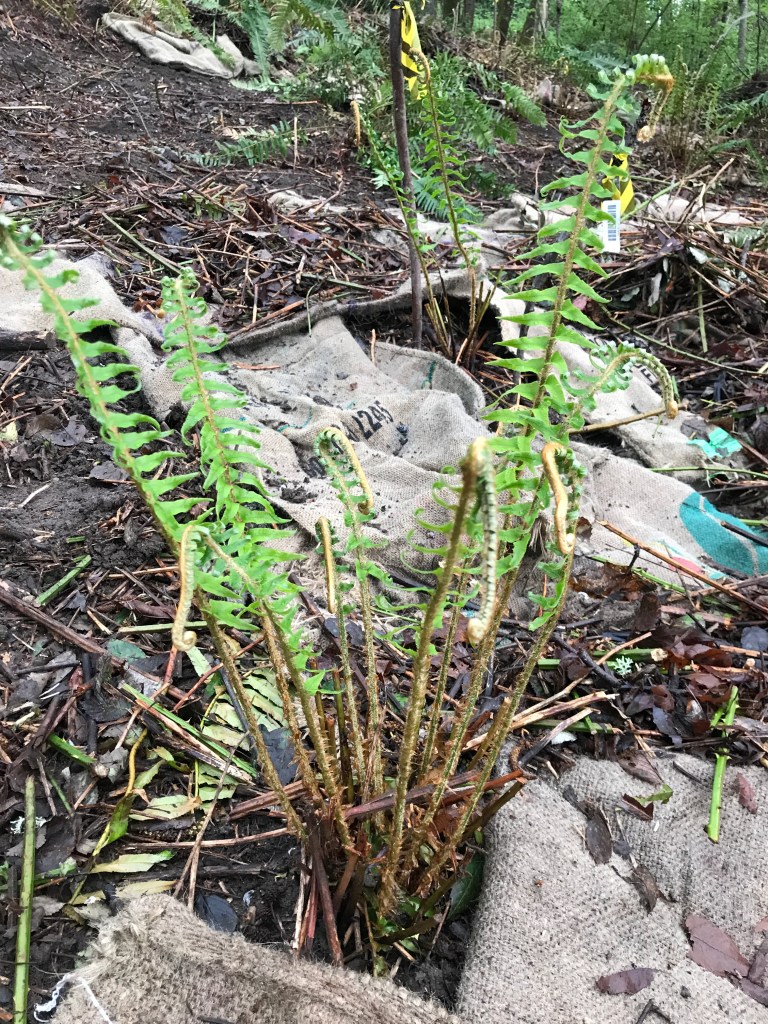
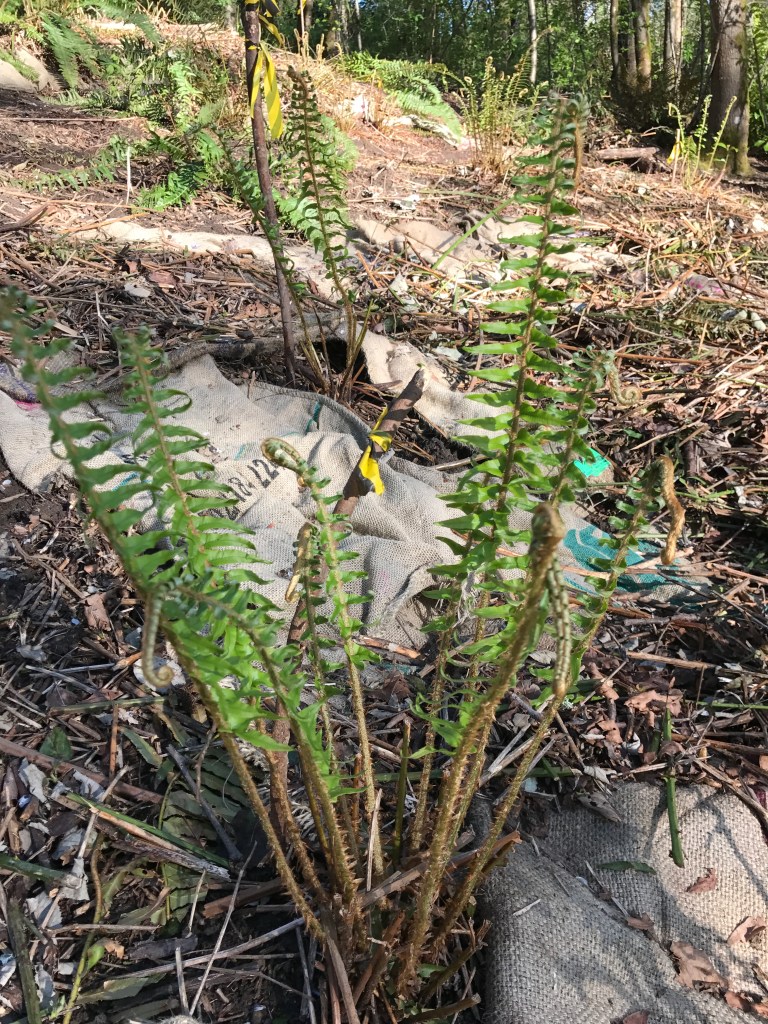
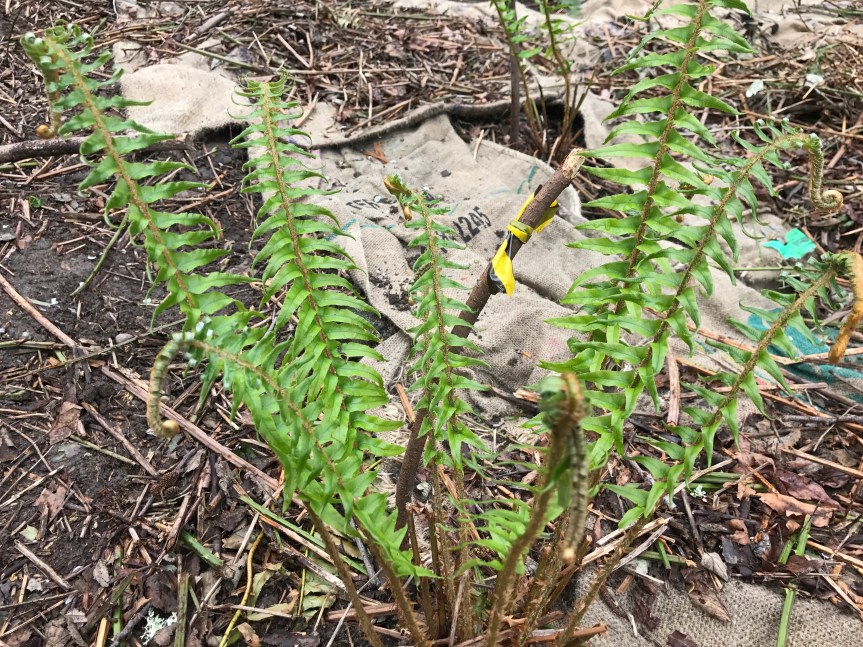
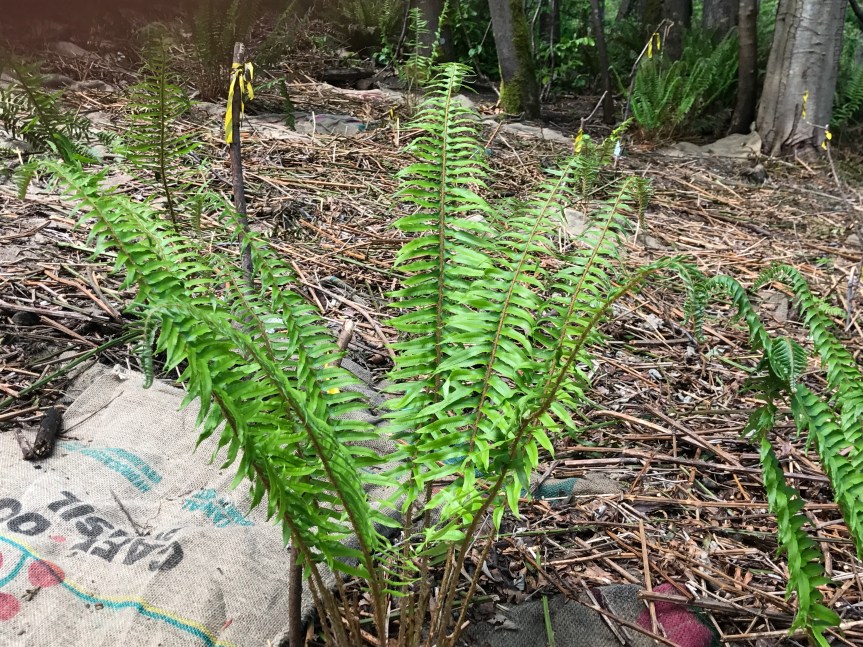

Yes, Nature is resilient, if we give her a chance to be.
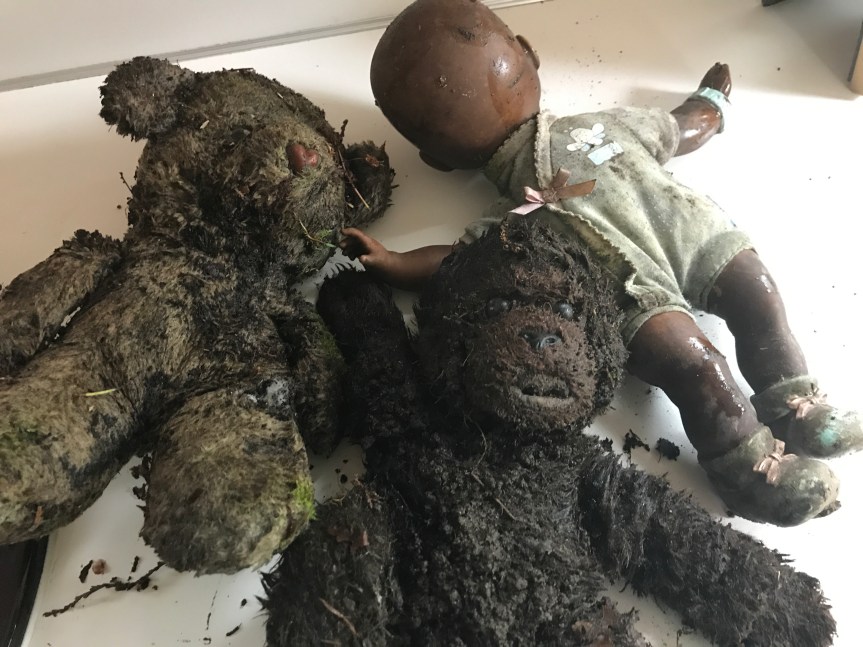
Yesterday, when I found these toys in the rubble of the house foundation that was recently unearthed in the Greenbelt, I got teary. Who were the children who had lost these toys? Had they cried when they realized they were missing? Were they once beloved toys?
Then I became puzzled. When I moved into this neighborhood in 1973, I had been told that there once had been a house in the lot behind mine; one that had burned in the 50’s. Even though this foundation is not directly behind my house, I have assumed it is the house that I was once told about. These toys had not burned, so had the house not burned either? If not, what had destroyed it?
The foundation has probably been covered by blackberry vines since sometime in the 60’s. Did the toys show up on the lot after that time? Had they been thrown over the embankment by inhabitants of the home above it? No one on this neighborhood even knew the house existed, so I will probably never know the answers to these questions.
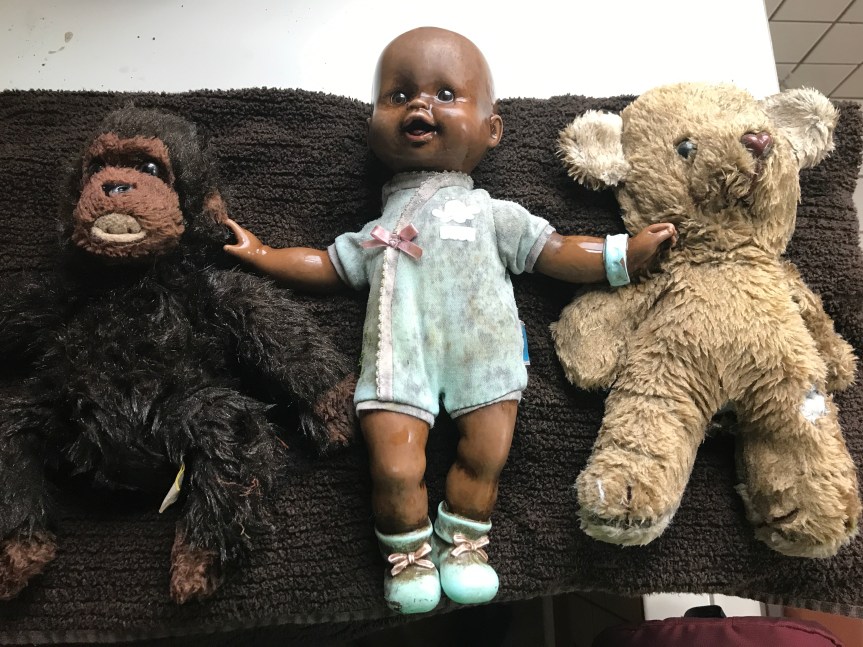
I brought the stuffed animals and doll into my house and cleaned them to the best of my ability. The transformation was remarkable!
Tomorrow, we will be holding another work party in the Greenbelt. Twenty students from an Environmental Science class at the University of Washington have signed up to participate. I wonder what we will find as we continue our endeavor to return this piece of land to the beautiful forest it once was.

Since September of 2016, our local GreenFriends group has been working to restore a four-lot strip of Seattle’s Greenbelt to the healthy forest it was meant to be. In October of 2016, we linked our project to the Green Seattle Partnership, a collaborative group that includes the City of Seattle Parks Department, Forest Stewards, and many other nonprofit organizations, all of whom are dedicated to restoring Seattle’s 2,500 acres of forested parks.
This strip of Greenbelt has been covered by blackberry vines and ivy for 30-50 years. When the City of Seattle staff cut down the blackberry vines in March of 2017, they discovered the foundation of a house. We believe that house burned down in the 50’s. With blackberry vines that at times reached nine-feet in height growing over and around it, no one in the neighborhood even knew the foundation was there. We decided to focus on that area during the April 30 work party.
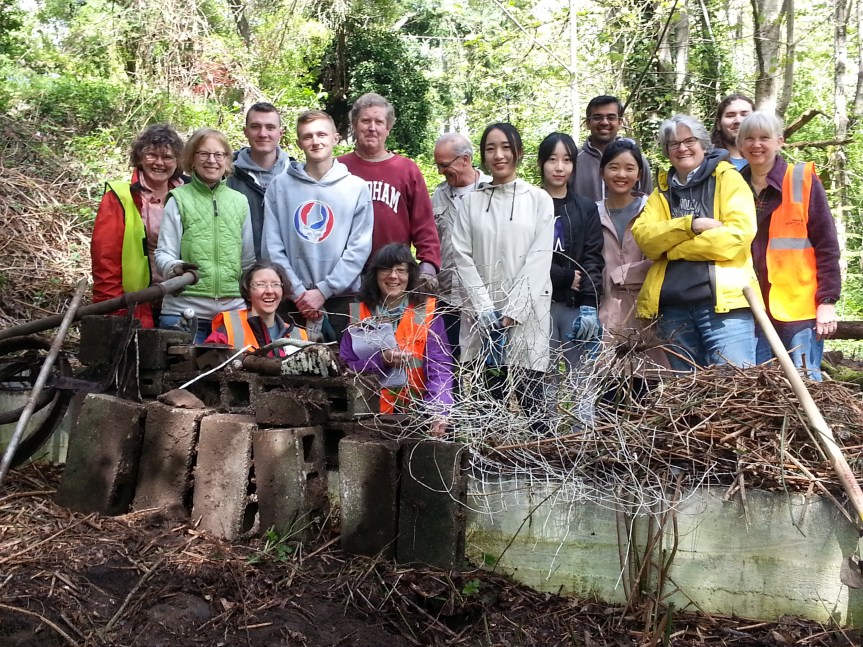
This particular work party was held in honor of Bridge 2 Beach Earth Day, an annual event focused on making “Mother Earth more beautiful and [Seattle] neighborhoods sparkle.” This year the Rainier Chamber of Commerce, the sponsor of the event, invited the Green Seattle Partnership to join in the effort.
Our work party began at 10 a.m. and lasted until 1 p.m. Seven GreenFriends, two Forest Stewards from the Green Seattle Partnership, a neighbor, and six students from a University of Washington Environmental Science class participated.

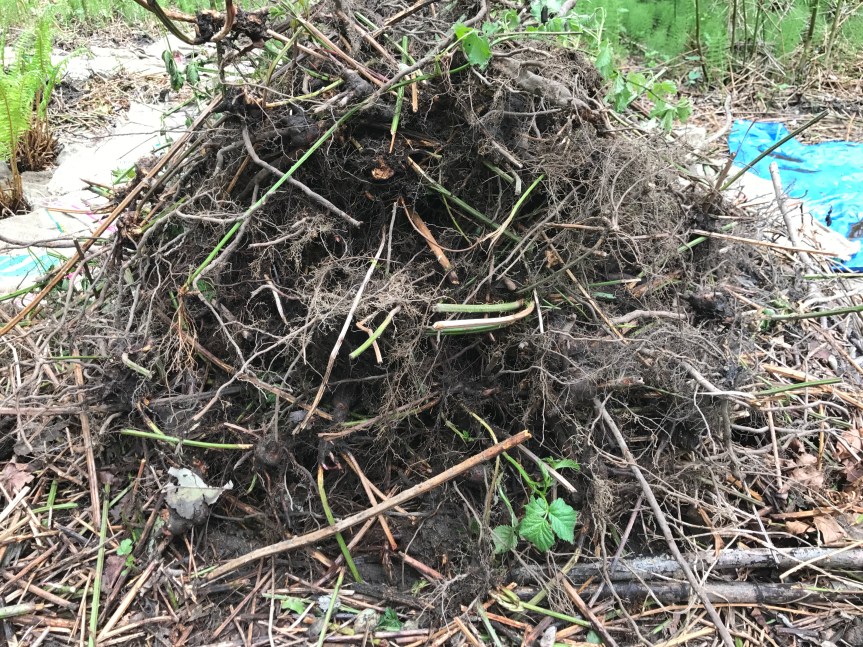
Our primary task for the day was to remove blackberry root balls and put them on racks made from fallen tree branches. That way, the roots cannot touch the ground and will dry out. The photo below shows one of the three root ball piles that we created that day. [Some of the root balls you see in the photo were touching the ground, so were moved to the top of the pile at a later time.]
In the process of clearing the root balls, we found many objects in the dirt. This was probably the first time these items had been exposed to the light of day since sometime in the 60’s


We even found a foot-long worm!

We have discovered many interesting things since we began the project. This may be my favorite one. I wonder how old it is.

Once the root balls are removed, we cover the cleared land with burlap bags to reduce weed growth. Then dried blackberry canes and other debris are placed on top of the burlap. In time, the bags and debris will turn into mulch which will hold in moisture and enrich the soil.
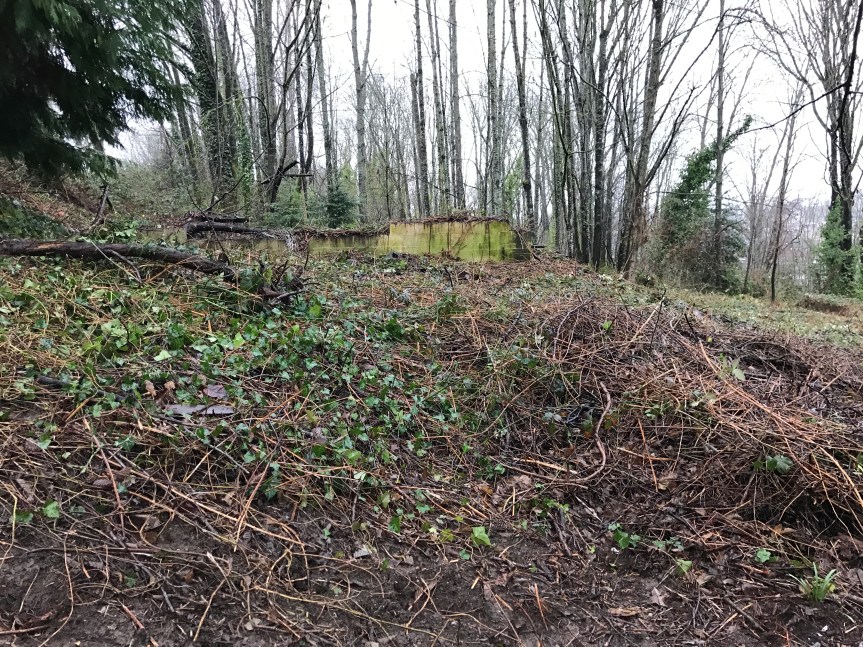
Below are some “before and after” photos from our three-hour work party.


It was such a fun, productive and rewarding day. We accomplished more than I ever thought possible. When I reported the students’ hours to their professor, he told me he was sure there would be plenty of interest if I wanted to schedule another work party. I decided to offer one on Saturday May 13. The professor sent a notice to the students at 7:30 p.m. and when I checked the next morning, the event was full! I look forward to whatever we experience and discover that day.
I laughed when I read that the April 26 Daily Post prompt was Roots. My life is filled with roots. I even dream about roots.
Our local GreenFriends group has taken on the responsibility of restoring four lots in Seattle’s Greenbelt. That land has been overrun by blackberries and ivy for decades. Part of our job in phase one of the project is to remove the blackberry vines and their root-balls.
The City of Seattle Parks Department staff cut down most of the blackberry vines in March. There are now thousands of canes sticking up from the ground. They lead us to the root-balls.


Raking up the debris makes it easier for us to see the canes and to dig out the root-balls.

Once we dig them out we put them on racks so they can dry out.
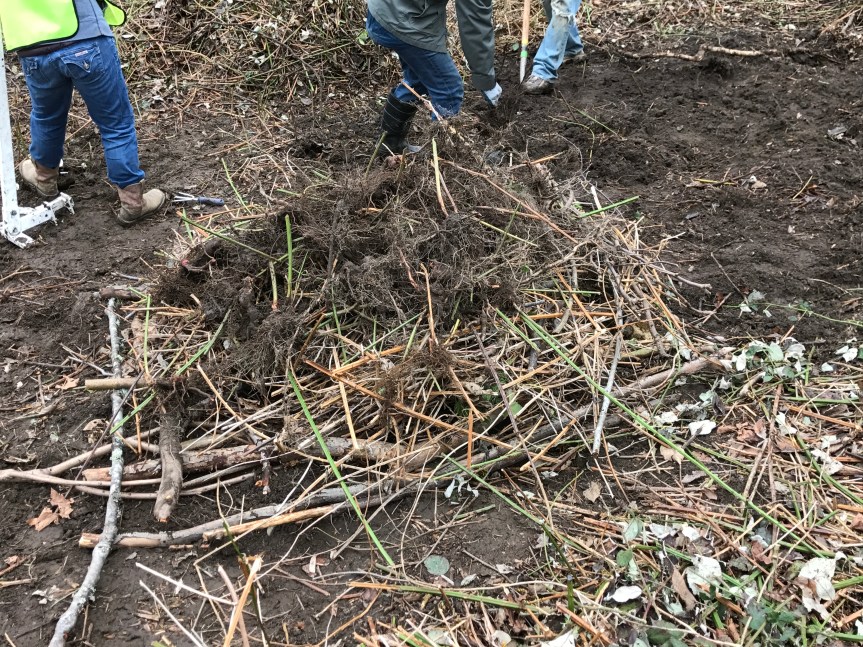

I suspect that blackberry root-balls will be in my life for years-to-come.


To read more about this project go to Greenbelt Restoration Project Update
So much has happened since I woke up one morning in late August 2016 realizing that I wasn’t willing to watch another tree die in the Greenbelt lot behind my house. That lot was filled with blackberries which had been growing for decades. I gathered my trusty hedge shears and lopper and started chopping them down.


Soon, a friend started working with me. A month or two after that, three other friends, members of our GreenFriends group, joined me in clearing the land of invasive plants. We decided we would make restoring this lot a GreenFriends project.


In October, we linked our project to the Green Seattle Partnership, a collaborative group that includes the City of Seattle, Forest Stewards and many other non profit groups, all of whom are dedicated to restoring Seattle’s 2500 acres of forested parks. One of the city botanists came to see the work we had already done, answer our questions and give direction.
We were told that it was necessary for least one member of our group to take the Forest Steward training. That training would teach us what needed to be done on the lot and how to lead restoration work parties. Ananya and I decided to become Forest Stewards. The training wouldn’t be held in March and April of 2017 but we would be able to continue to remove the invasive plants in the meantime. We wouldn’t hold big work parties until we took the training.
Each restoration project has four phases: 1) Remove invasive plants, 2) Plant trees, shrubs and ground covers, 3) Plant establishment- watering, weeding, mulching and 4) Long term maintenance. Our project is in Phase 1. Once the invasive plants are gone, Seattle Parks Department will provide all of the trees, shrubs and ground covers for volunteers to plant.
We decided we would not only restore the one lot, we would restore the whole four lot strip of Greenbelt that it is a part of. The lot behind my house is Lot 3 and has been covered by invasive plants for around 30 years; Lot 2 and 4 have been covered for fifty or more years. There has been quite a bit of restoration work done in Lot 1 during the last three or four years. It needs maintenance work, but when we look at the many new trees, shrubs and ferns that run through it, we are able to visualize what the whole strip will become.
As we continued to remove the invasive plants, we found so much trash. In addition to the big garbage, there were tiny pieces of plastic everywhere. I found a bird’s nest that was full of plastic.


On Saturday, February 25, six children and their leader came from Redmond Satsang’s Bala Kendra program to pick up litter. This was their haul after an hour of work.

We have been cutting down invasive bamboo since the project began. Last month, Yashas and I cut off the leaves and branches from the stalks. Those stalks which were suitable for stakes were given away. [Note: When the project began, we were told we could give the bamboo to the zoo for the elephants to eat. That person, and the rest of us, had forgotten that the Seattle zoo no longer has elephants!]


We continued to remove the invasive hemlock plants, blackberries and ivy.


Yashas and I took a one day course to learn how to make live stakes. Live stakes are cuttings from shrubs that are used to make new shrubs. I brought 75 of them home (Twin Berry, 9 Bark and Indian Plum) and planted them in pots. In the fall, we will see how many of them rooted, and will plant the ones that did in the Greenbelt.


Volunteer groups are not allowed to use power tools, so when they are needed, city workers come to do the work. In March, eight workers from the Seattle Park Department cut down most of the invasive vines and bamboo on this four lot strip of Greenbelt. That will make it much easier for volunteers to dig out the blackberry root balls and ivy. It also opened up a view of the whole property that no one has seen for 50 years or more.


When they cut down the blackberries in the second lot, the workers found something that surprised all of us. There was a foundation of a house! I have lived here since 1973 and didn’t know there used to be a house there, and neither did my neighbors. Interesting objects were found in or near the “house.”


In the weeks after the city workers came, I spent a lot of time pulling out building racks we will put the blackberry vines and ivy on so they can dry out, digging out blackberry rootballs and covering the cleared land with burlap.


On March 4, Ananya and I took the first half of the Green Seattle Partnership Forest Steward training. We took the second part on April 1. We will attend ongoing training courses but are now qualified to lead bigger work parties.


On April 8, we held the first “official” work party. Nine volunteers met to build racks for the debris, rake debris, dig out ivy and blackberry root balls and find and mark ferns. We accomplished so much in our three hour work party. (You can click on any of the galleries in this post to see a bigger version of the photos.)


My update is now complete. This project has become my passion so you will definitely read more about it in the future!
(Previous posts about my experiences in the Greenbelt: Is My Path Taking a Turn?, The Will to Live, and Another Greenbelt Adventure.)
The Art and Craft of Blogging
A collection of discussions on the environmental issues
“The fool doth think he is wise, but the wise man knows himself to be a fool.” “Love all, trust a few, do wrong to none.” “Love looks not with the eyes, but with the mind, And therefore is winged Cupid painted blind.”-William Shakespeare
...moments of unexpected clarity
Home of Lukas Kondraciuk Photography
Wellness, Support and Mindset
Thoughts on Creativity & Deeper Things
A Blog by Novella Carpenter
Ramblings of an Irish ecologist and gardener
Teaching the art of composition for photography.
Blog from SathyaSaiMemories ~ stories of love in action and the benefits of giving
There are 11,507 stories in Haddonfield; this is one of them.
Perennial gardening and more from the Green Mountains of Vermont
Whatever it will be...
Welcome to my little slice of the blogosphere
 Living, Learning and Letting Go