Reflections on Fear

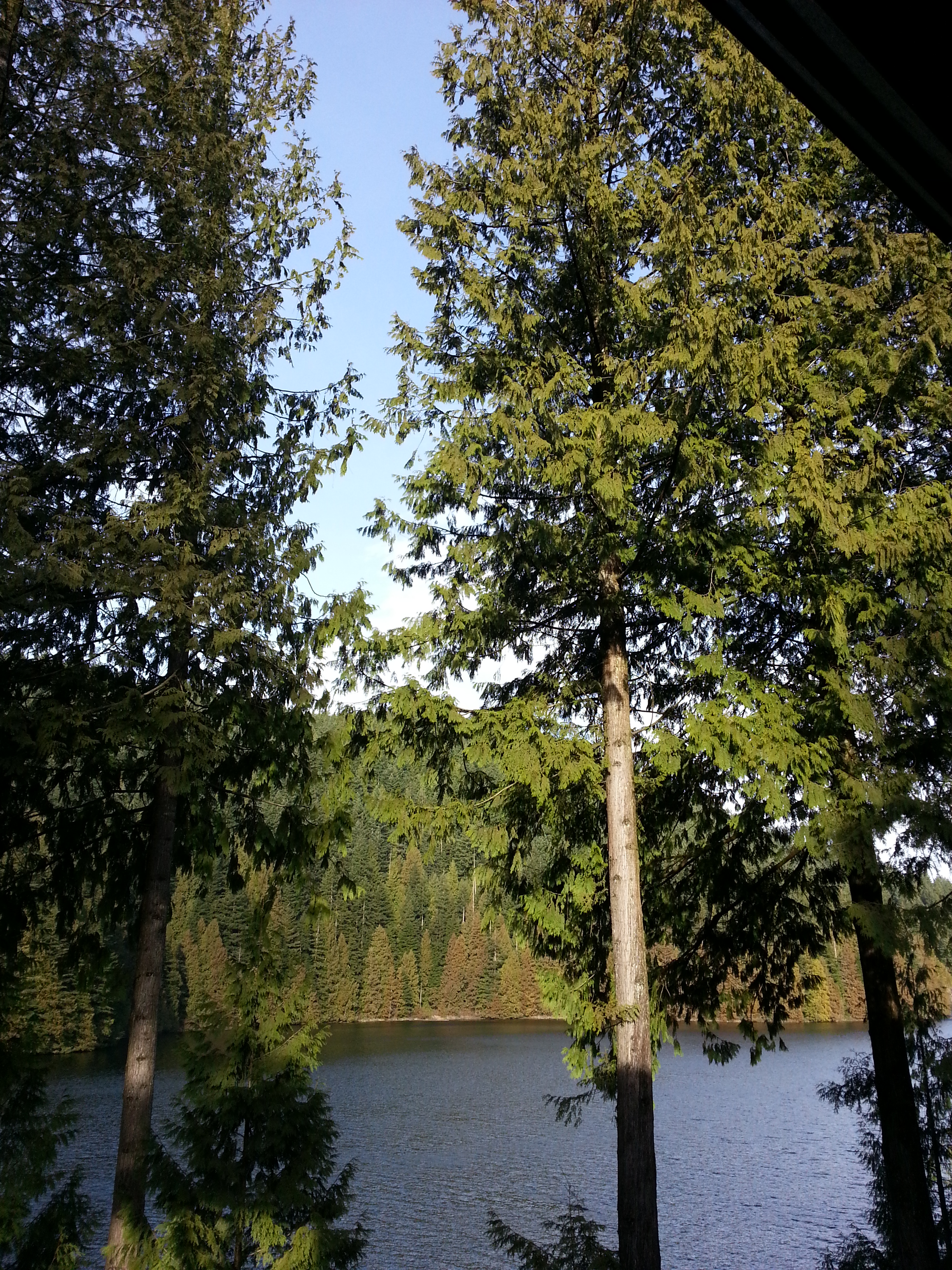
IMG_20150420_105439

Over the years I have learned many sayings and acronyms relating to fear. I have found them to be useful tools in my own life journey and have also used them with clients in my psychotherapy practice.  Here are the ones that come to mind at the moment:

Feel the Fear and Do It Anyway.

Fear and excitement are two sides of the same coin.

We can see fear as:

      False Evidence Appearing Real

      Forget Everything And Run

or

     Feeling Excited And Ready

     Face Everything And Rise


Other important factors:

It is important to feel Fear when we are in danger. The emotion indicates that we need to take action. Fight or Flight might be necessary.

Most of our Fear however is Fear of the future. We often feel much more Fear of what might happen then we would feel if it did happen.

Fear may also mask another feeling. That usually happens because there were unacceptable and acceptable feelings in our families of origin. In my childhood home, feeling Fear was fine.  Feeling anger was not. Therefore, I learned to feel Fear at times when I was actually angry. Once I saw this pattern, I realized it was important that I ask myself if I was angry anytime I felt Fear.

There is so much I could say on this topic but instead I am going to end with the video that Sreejit used at the beginning of the Dungeon Prompt that inspired this post.  I find the video deeply moving.  It also demonstrates many of the aspects of fear I have addressed.


Love Yourself, Love Others

Hjärta


During the last two months, I have been invited by two blogging sisters (SeasonedSistha2 and Tournesol Dans Un Jardin) to write ten four-word sentences about love.  The form of the challenges were different, so I decided to do it my own way!  Here are the sentences that came to my mind:


Love has many forms

Love through a smile
Love through a word
Love through a touch
Love through a look

 Love heals painful wounds
Love leads to happiness
Love helps build communities
Love can transform evil

 Love yourself, Love others


What four-word sentences about love would you like to add?


Recovering from Over-Doing

dungeon-prompts1

In this week’s Dungeon Prompt, Sreejit asks us to fill in the blank in this sentence:  “I am a Recovering _________.” There was no doubt in my mind what the behavior would be for me. Using the Alcoholics Anonymous introduction, I will say: “Hi!  I am Karuna, and I am a recovering over-doer.”

As I thought about how I would present this topic, I decided to create a new disorder. My fictitious disorder is called “Being versus Doing Disorder.”

The Being vs Doing disorder is on a continuum where the center, a balance between being and doing, is the healthy portion of the continuum. The more someone moves to either end of the continuum, the more likely it is they will have dysfunction in their lives.

When I think of the over-being end of the continuum I think of non-productivity, passivity, and lack of motivation. I don’t know as much about that part of the spectrum since I have almost no personal experience there. I have seen it at work in clients and friends though.

Over-doing has many facets. It commonly begins in childhood when the only or main way to get positive attention from parents is to do impressive things. It also develops when parents criticize their children anytime they are relaxing or are doing things the parents consider nonproductive.

As a result, adults with an over-doing disorder may be seeking validation and praise for what they accomplish. An over-doer is also likely to be a rescuer. As such, they do things they aren’t asked to do and are likely to do things they don’t want to do. In addition, they do more than their share of the work that needs to be done and do things for other people that they could do for themselves. Those with this “disorder’ are likely to over-commit and seem incapable of being still.

Over-doing has been a major characteristic of my adult life. At one point, I was raising two children, working three jobs, doing my personal therapy and in school studying for a PhD.   During my therapy, I realized I didn’t want a PhD, I was just seeking attention from the father, who had disowned me.  I stopped my schooling but was still overdoing. Before long, I began to experience extreme exhaustion and was diagnosed with Chronic Fatigue Syndrome (CFS).

With CFS, I was in survival mode and it was impossible for me to do as much as I had been doing, although I still tried to.  When it began dissipating after five years, I went back to over doing. There is no doubt that a part of me believed it was only acceptable for me to stop if I was sick.  Eventually I developed high blood pressure and other physical problems.

I reached a point where I had to cut back on all of my commitments. Nowadays, I am putting my emphasis on doing the things I want to do, and am saying no to many requests.  I still have trouble with “simply being” but I no longer am into major over-doing.   I hope some day I will be much closer to the center of the being-doing continuum.

I have realized a behavior that really fueled my over-doing disorder was the desire to be “in the know.” That puts me in the place of being asked for information that I don’t want to share, which then creates stress, whether I share it or not. As I continue to slow down, I am finding myself holder of less information. I am loving responding to requests with “I’m not in that loop anymore. You will have to ask someone else.”

I learned many skills during my over-doing years.  Last week friends of mine were in a life and death crisis and I stepped in to help immediately.  There is a time and place for those skills, but it takes discrimination to use them correctly.  In that instance, I have no doubt that my choices were appropriate.

I am very committed to my recovery from over-doing. While I may find myself immersed in the old behaviors from time to time, I don’t think I will ever be drawn so deep into them again. I see what I am doing  much sooner and and change course when needed.

In evaluating myself on the scale found in Portia Nelson’s Autobiography in 5 Short Chapters, I find I am in generally in Chapter 4 or 5.

Chapter IV

I walk down the same street.
There is a deep hole in the sidewalk.
I walk around it.

Chapter V

I walk down another street.


Every time I walk around an invitation to over-do or avoid putting myself in the situation where I know I am going to be tempted, I consider my choice worthy of celebration!  I am truly movig towards a life of balance.


Do you have a “Being vs Doing” disorder? Where do you fall on the continuum? How does it disrupt your life? Do you consider yourself in recovery?


Quote Regarding Meditation

640px-Kamakura_Budda_Daibutsu_front_1885
Photo Credit: Wikimedia


Today I was sent a quote that was attributed to Buddha.  It said:  “Buddha was asked, ‘What have you gained from meditation?’ He replied, ‘Nothing! But let me tell you what I have lost.  Anger, Anxiety, Depression, Insecurity, Fear of Old Age and Death.”  I loved the quote but decided to check it out.  While it can be found all over the internet, it was listed under fake Buddha quotes.


An earlier version of the quote is found in the 1973 publication of World Buddhism, Volume 22  by the World Fellowship of Buddhists.  It was not directly attributed to Buddha.


It may be stating the case too strongly to say that in meditation one seeks to gain nothing. For there is an increase in happiness and peace of mind. But when asked, “What have you gained from meditation?” the answer would be: “It is not what I have gained that is important but rather what I have diminished, namely, greed, hatred, and delusion.”


I like thinking of meditation in this way.


Weekly Photo Challenge: Reward

This morning, I walked while chanting the Sri Lalita Sahasranama.  This is a sacred text that I ideally would be chanting daily.  As I walked, I was pulled by the desire to be focusing on the beauty around me rather than reciting the chant.  I have felt that pull many times before, but it was particularly strong today.

Then the question “Isn’t focusing on the beauty of Mother Nature a spiritual practice too?” came into my mind.  Of course it is; about that I had no doubt.  I realized what wanted to be doing was to immerse myself in nature, taking photographs to share on my blog and in the GreenFriends newsletter I organize monthly.

For the rest of my walk, I continued my chant, but if I felt called to stop and look at something and/or take a picture, I did.  Sometimes I felt literally “called” in that it seemed like a song bird or crow was calling out to me.

I felt “rewarded” for being flexible in my definition of spiritual practice by capturing several beautiful photographs.

I suspect that tomorrow morning I will be going on a nature walk!

*****

Written for Weekly Photo Challenge: Reward

Mahatma Gandhi Quote

Mohandas_K._Gandhi,_portrait
Photo Credit: Wikimedia


My imperfections and failures are as much a blessing from God as my successes and my talents and I lay them both at his feet.


Wordless Wednesday

IMG_3293

The Development of Trust (Acrostic)

Day 3’s assignment for Writing 201: Poetry is to write a poem about trust, using the form of an acrostic.

  • An acrostic is any poem in which the first (or last) letters of each line combine to spell out a word or a phrase, or follow the order of the alphabet.

  *****

Here is the result of my effort!

Blind faith does not the basis for true trust make,

Experience after experience is what it will take.

Seeing- hearing, being-doing,

Time, effort and discrimination are a must.

Intuition’s a factor, but inner silence may lead to “knowing” robust.

Let go of the need for perfection, that’s not the aim;

Live, learn, let go, and allow the other to do the same.

*****

The act of writing this poem was an experience in and of itself.  I focused on letting go and letting the words emerge rather than trying to force them.  When I came to close to finishing it, I was bothered by a couple of lines and wondered if they would be misunderstood.  My eyes were then drawn to the line “Let go of the need for perfection, that’s not the aim.”  I reminded myself this is my third poem.  No one else will expect perfection from me, and I shouldn’t expect it from myself.

Over the next hour or so I tweaked a couple of words.  Soon thereafter, I realized the entire poem could be seen as a message to me.  I will learn to trust in my ability to write poetry as I continue to write poems!

*****

Journey Into the Mind (Limerick)

20150216_094603


I spent the weekend in a place of incredible beauty.  The company was wonderful, the food was great.  I was doing the things I love to do, singing, chanting, being.  What more could I ask?  I could ask for a mind that would stop thinking, stop worrying, let me rest.


What better subject to address in my second Writing 201 assignment:  “Write a limerick about a journey.”

  • Limericks are traditionally composed of five lines of verse.
  • The traditional rhyming scheme of a limerick is a a b b a — the first two lines rhyme, then the next two, and the final verse rhymes with the first couplet.

*****

My First Limerick

Journey into the mind, dark and dreary.
Caught in the maze, alone and teary
.
Where is the peace?
Where is the release?
Bring me out of this state so bleary.

*****

Written for Writing 201:  Journey

Wayne Muller Quotes: Being Special in Importance and/or Woundedness

Wayne Muller

Grandiosity and Importance

“As we grew, we began to feel responsible for how everything around us turned out– the happiness and suffering of our parents, our spouses, our friends, our colleagues and our children.  One of the reasons we learned to judge ourselves so mercilessly is that we held ourselves to a much higher standard than the rest of humanity.  Others were allowed to fail, to falter, to seek the help of others; we, on the other hand, were required to do it all perfectly, by ourselves, without a mistake, without the aid of anyone else.”  Continue reading “Wayne Muller Quotes: Being Special in Importance and/or Woundedness”